
Reclamation of Waste Foundry Sand
Mechanical and thermal reclamation that returns spent foundry sand to moulding quality instead of landfill.
PlatformsMicrograder
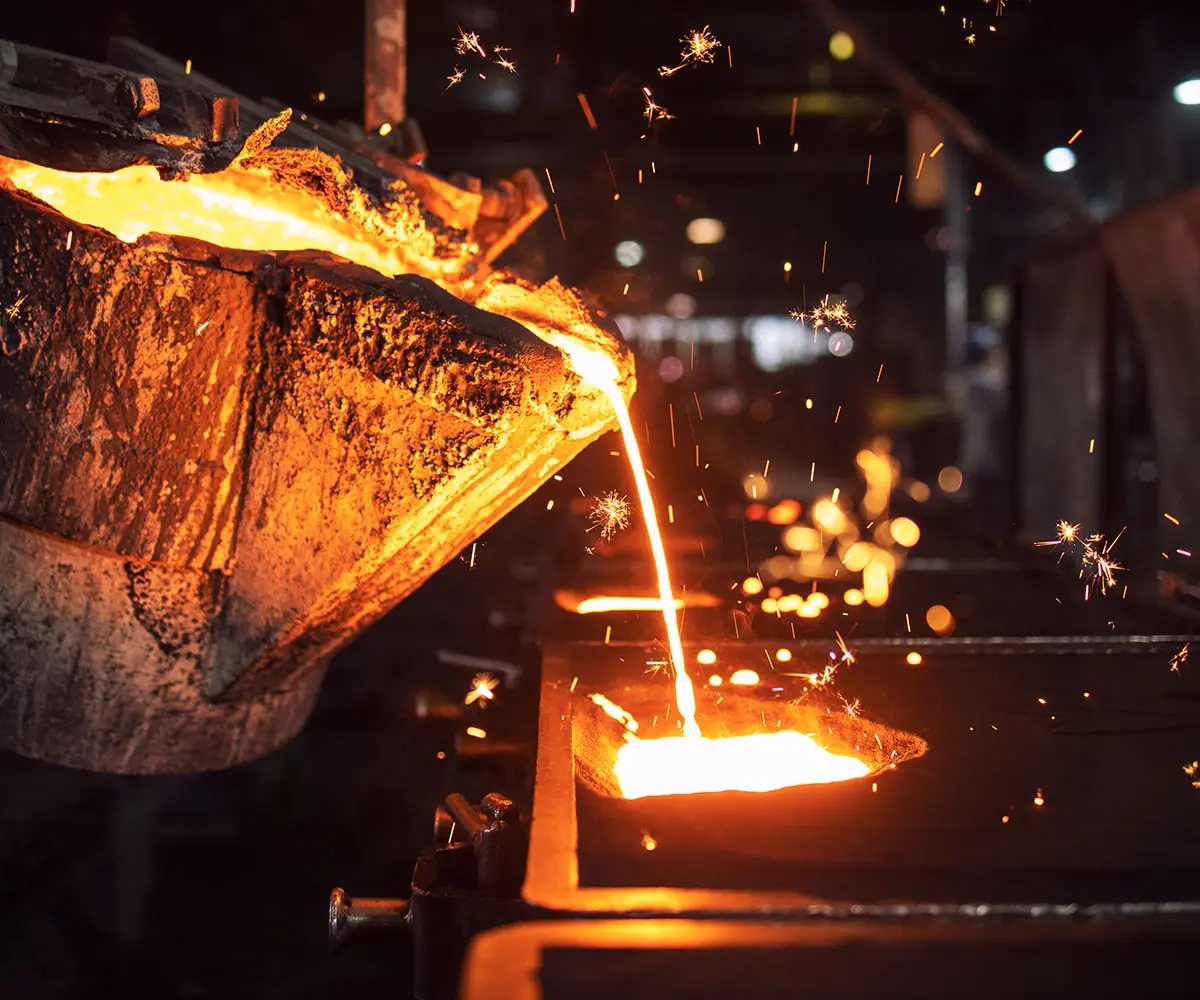
Waste foundry sand (WFS) is spent casting sand that has lost its binding properties after repeated exposure to high temperatures and molten metal. CFlo's Sand Reclamation System recycles it through mechanical crushing and scrubbing followed by thermal treatment at around 800–900 degrees Celsius, burning off binders and additives so the sand can return to moulding and core-making.
A growing industry, a growing waste stream
The foundry industry has grown substantially worldwide, with global casting rates up 2.6% compared to 2018 at over 112 million tonnes. India holds second position, with around 5,000 foundries and an installed capacity of approximately 7.5 million tonnes per year; 90% of these fall under the Ministry of Micro, Small & Medium Enterprises, alongside several unregistered foundries.
The dominant casting process is the sand cast system. Virtually all sand cast moulds for ferrous castings are green sand: high-quality silica sand, bentonite clay as the binder, water, and coal as a carbonaceous additive to improve casting finish. Casting one tonne of iron or steel requires on average one tonne of sand, and raw foundry sand typically exceeds the quality of bank-run construction sands, with American Foundry Society (AFS) grain fineness numbers typically between 50 and 58.
Why foundry sand becomes waste
After a certain number of cycles, foundry sand loses its binding properties through exposure to high temperatures and contact with molten metal. Its physical and chemical properties degrade, rendering it unsuitable for continued use: it becomes Waste Foundry Sand (WFS) requiring disposal.
Unplanned disposal poses significant environmental risks. Foundry dust contains toxic materials that contaminate water sources, leading to water and air pollution. Approximately 1.71 million tonnes of waste foundry sand are generated by foundry units annually.
Two routes, and they are not alternatives
Spent foundry sand can go back into the foundry or out to construction, and the two are usually discussed as though a plant has to choose. In practice they sit in sequence.
Back into the foundry is the valuable route while it lasts. Sand from collapsed moulds and cores is crushed, scrubbed and, where the binder demands it, thermally treated, then returned to moulding with new sand and binder added to hold casting quality. Every tonne reclaimed here is a tonne of new silica sand not purchased.
Out to construction is where the sand goes when it can no longer hold a mould. Reclamation extends the sand's working life; it does not make it eternal, and eventually the grain is too degraded to bond regardless of treatment. At that point its lower unit weight, higher water absorption and increased void percentage make it a material a concrete mix has to be designed around rather than a drop-in sand.
Reading the two as a sequence rather than a choice is what makes the economics work: reclaim while the sand is still worth reclaiming, then sell it on rather than dump it.
Reutilisation of WFS
Reutilisation is the substantial remedy. WFS has distinct characteristics compared to regular concrete sand: lower unit weight, higher water absorption and increased void percentage. Because integrating WFS as a partial replacement for fine aggregates can negatively affect concrete slump, each industry must assess the acceptable extent of recycled sand usage.
Within the foundry itself, sand from collapsed moulds or cores can be reclaimed and reused, supplemented with new sand and binder to maintain casting quality and compensate for normal sand loss.
The CFlo Sand Reclamation System
CFlo's Sand Reclamation System employs mechanical and thermal treatments to recycle sand for moulding and core-making:
- Crushing breaks down lumps into fine particles similar to their original size and shape
- Scrubbing partially removes adhering moulding binder material, though some additive or binder residue remains on particle surfaces after mechanical treatment
- Mechanically treated sand then undergoes thermal reclamation in a specially designed furnace or chamber heated to around 800–900 degrees Celsius
- Further scrubbing inside the fluidised furnace facilitates the complete burning of binders and additives
The related CFlo platform for foundry sand duty is the Micrograder classification system.
Frequently asked questions
Can spent foundry sand be reclaimed and reused in the foundry?
Yes, and that is the more valuable route while it lasts. Sand from collapsed moulds and cores is crushed, scrubbed and where necessary thermally treated, then returned to moulding with new sand and binder added to hold casting quality. Every tonne reclaimed is a tonne of new silica sand not bought.
What happens when foundry sand can no longer be reclaimed?
It goes to construction rather than to landfill. Reclamation extends the sand's working life but does not make it eternal: eventually the grain is too degraded to bond whatever the treatment. Its lower unit weight, higher water absorption and greater void percentage mean a concrete mix has to be designed around it rather than simply substituting it in.
What is waste foundry sand?
Waste foundry sand (WFS) is casting sand that has lost its binding properties after repeated cycles of high temperature and contact with molten metal. Its physical and chemical properties degrade until it is unsuitable for further use, requiring disposal. Foundries generate approximately 1.71 million tonnes of WFS annually.
Why can't spent foundry sand simply be reused?
Heat and molten metal degrade the sand's binding properties, and mechanical treatment alone leaves binder residue on the particle surfaces. Full reclamation needs both mechanical scrubbing and thermal treatment; only then does the sand behave like fresh moulding sand, supplemented with new sand and binder as needed.
How does thermal sand reclamation work?
After crushing and scrubbing, the mechanically treated sand enters a specially designed furnace or chamber heated to around 800–900 degrees Celsius. Further scrubbing inside the fluidised furnace facilitates the complete burning of remaining binders and additives, returning the sand to a condition fit for moulding and core-making.
Can waste foundry sand be used in concrete?
Partially, with care. WFS differs from regular concrete sand: lower unit weight, higher water absorption and increased void percentage, and using it as a partial fine aggregate replacement can reduce concrete slump. Each user must assess the acceptable extent of recycled sand in their mix.
How much sand does a foundry consume?
On average, casting one tonne of iron or steel requires one tonne of sand. Foundries rely on high-quality, size-specific silica sands, typically better than bank-run construction sand, with American Foundry Society (AFS) quality standards maintained between 50 and 58.
Why is WFS disposal an environmental concern?
Unplanned disposal leads to water and air pollution: foundry dust contains toxic materials that can contaminate water sources. With roughly 1.71 million tonnes of WFS generated annually, reclamation and reutilisation are the practical remedies to a large and persistent waste stream.