
Reurban C&D Waste Recycling Plant
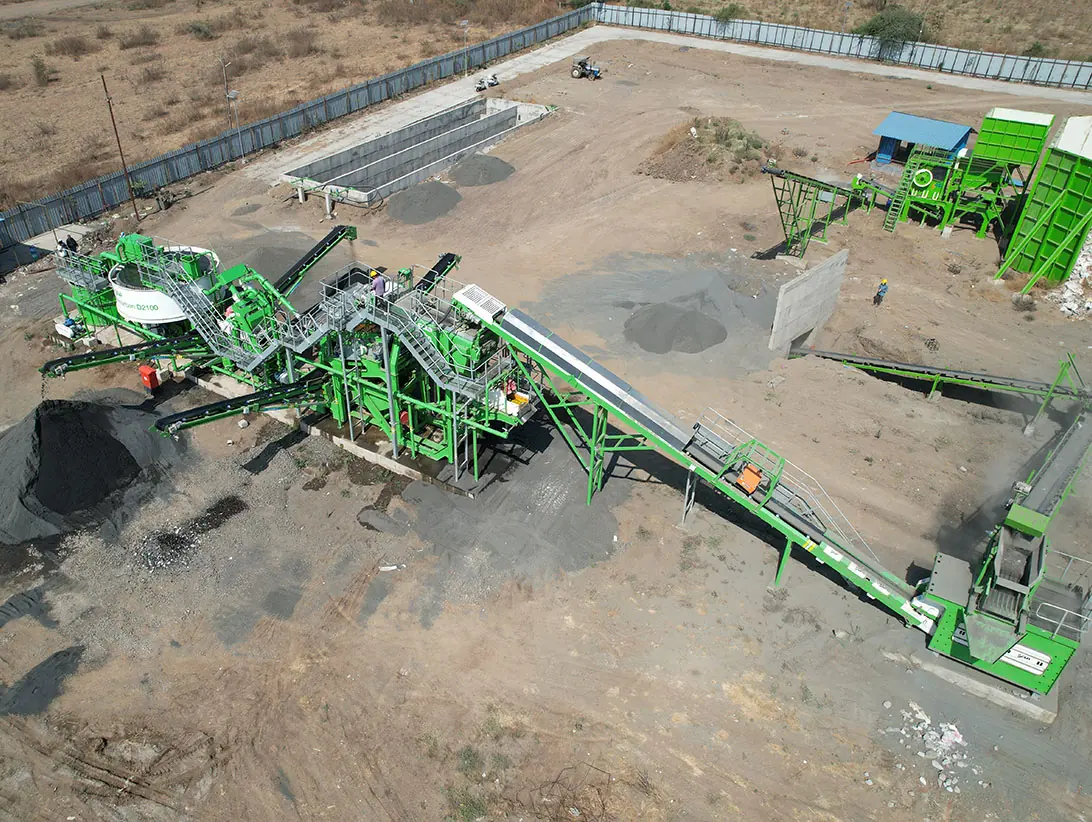
Mobile recycling for in-situ processing: recycle waste directly on site to reduce environmental impact and optimise logistics.
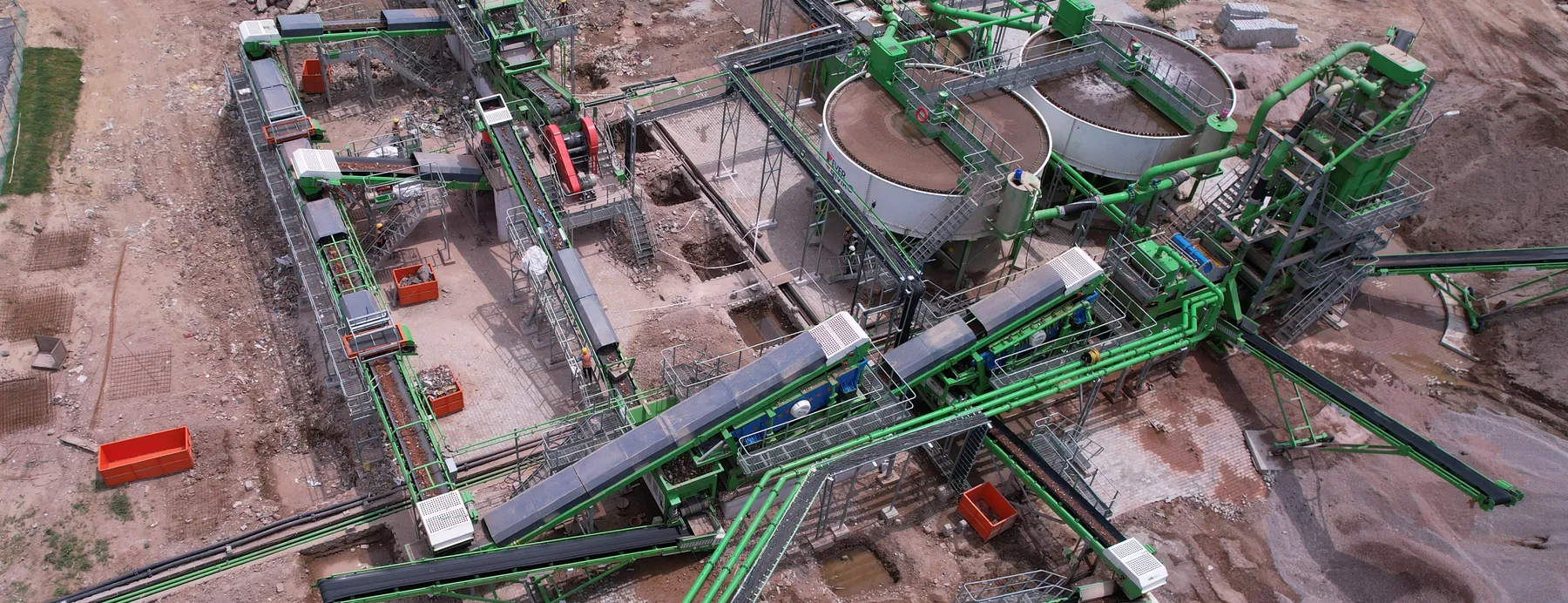
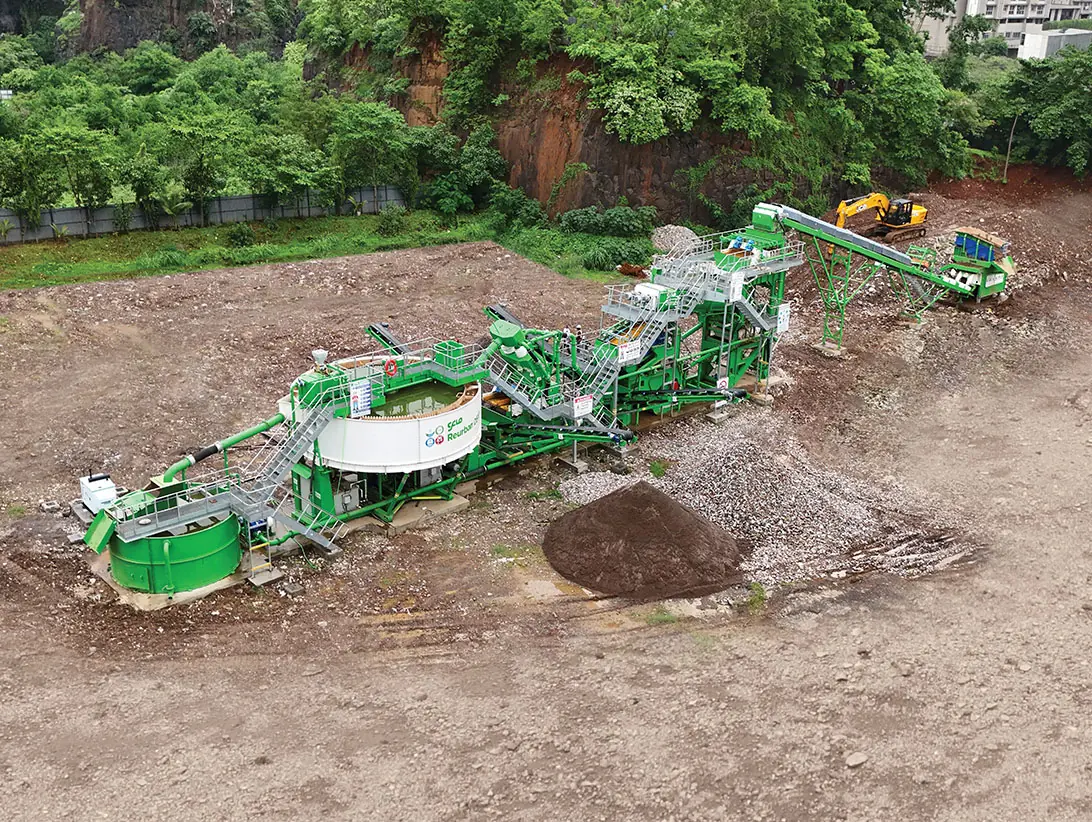
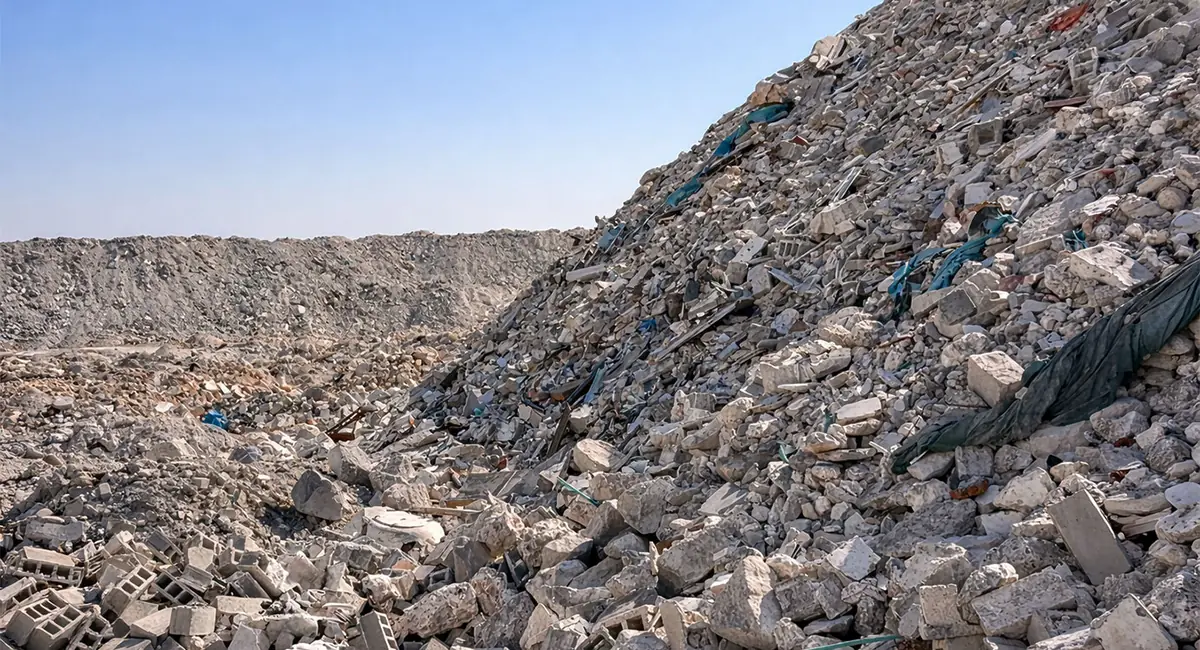
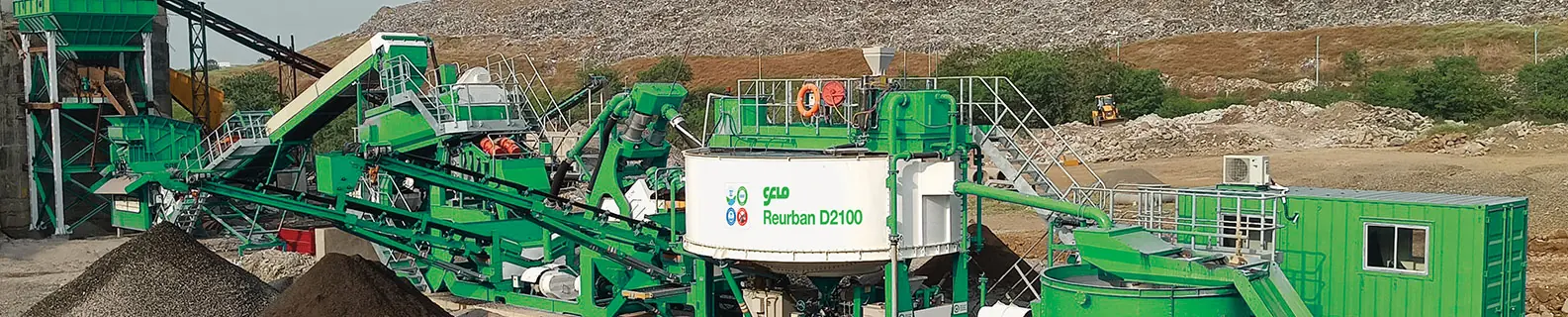
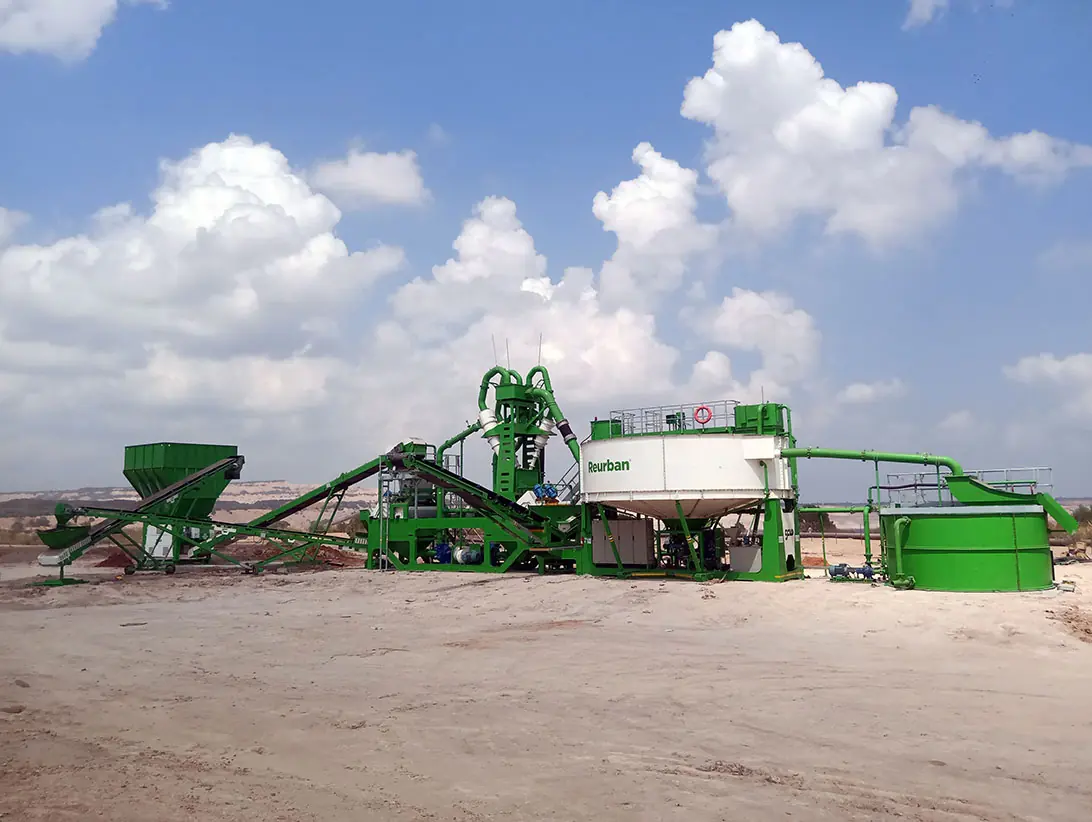
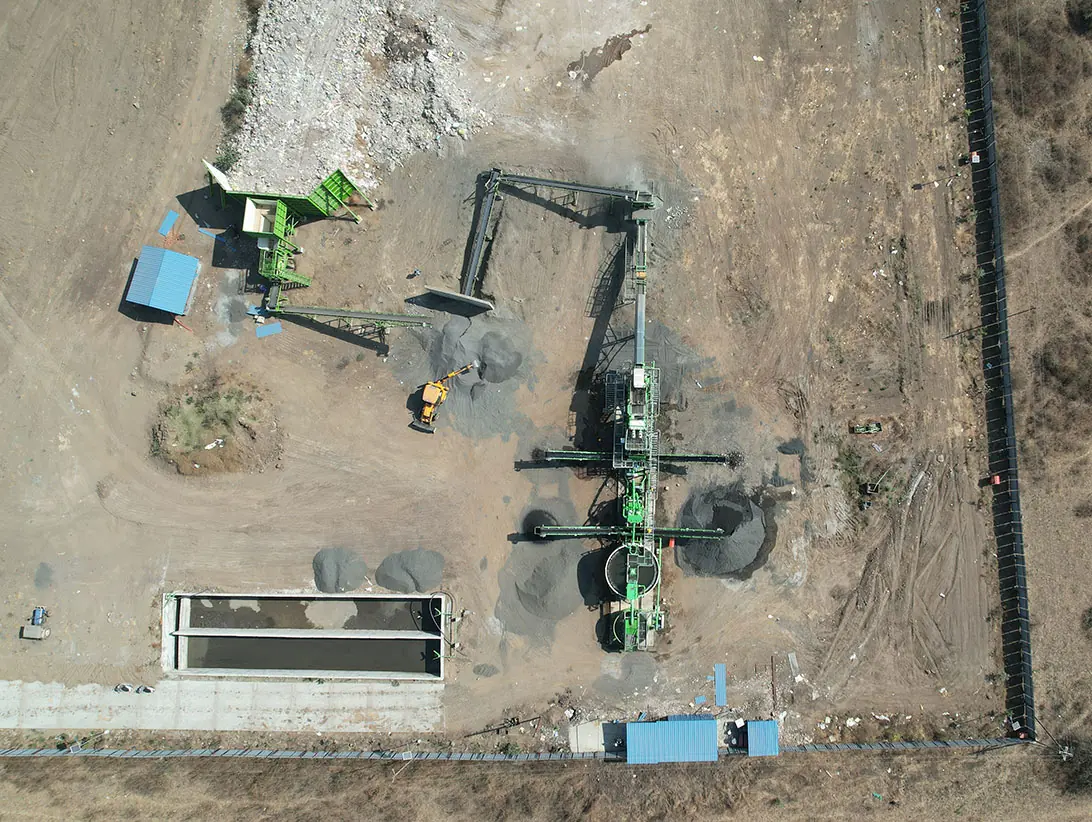
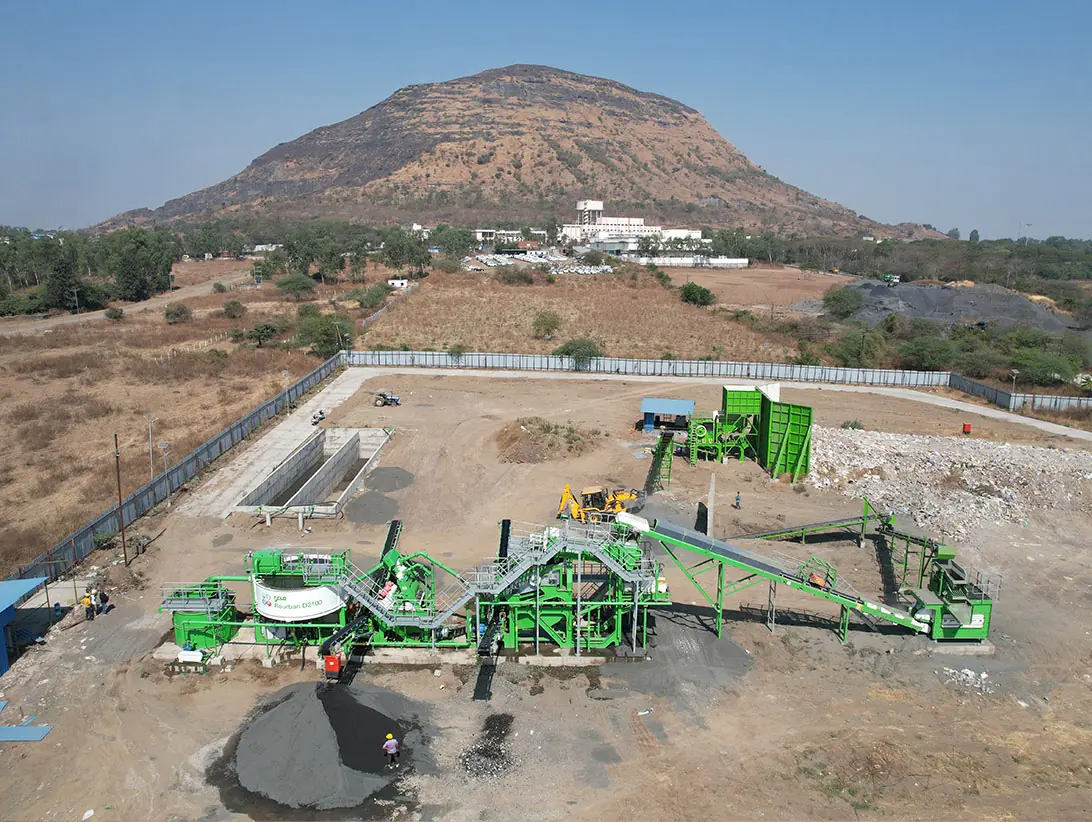
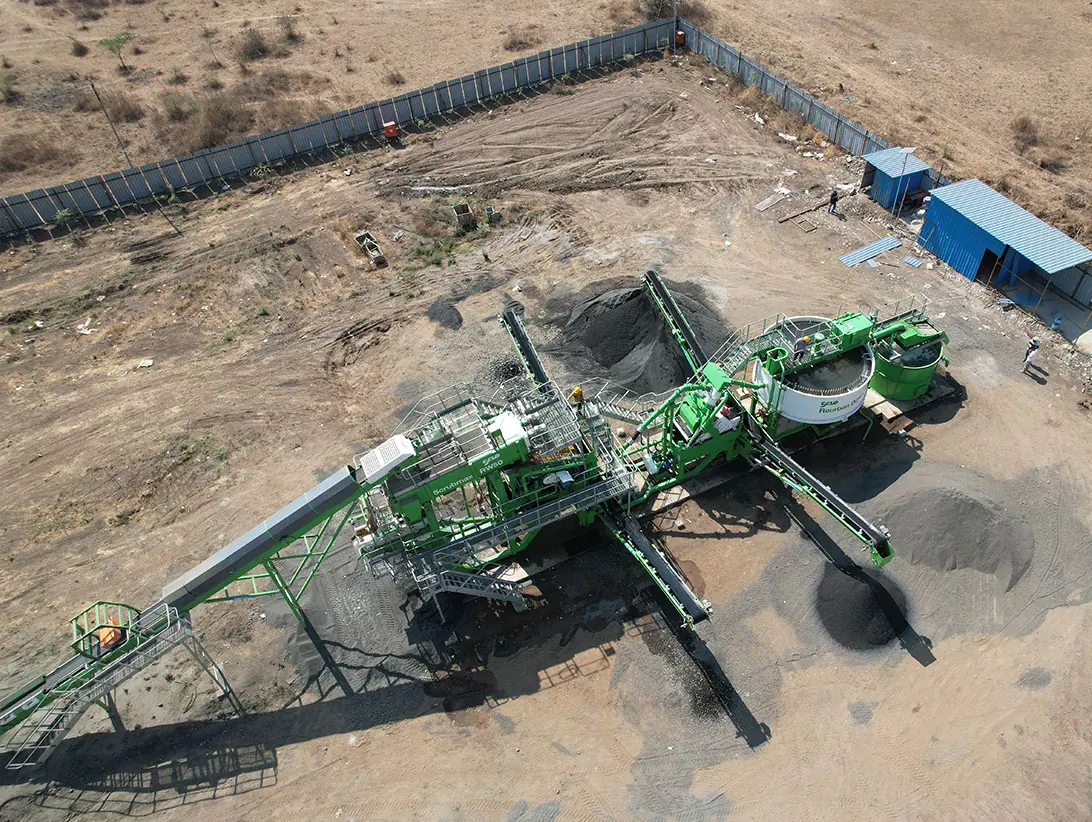
The CFlo Reurban is a mobile wet processing plant that recycles construction and demolition waste in situ into specification-grade sand and aggregates. Scrubmax scrubbing and trash removal strip out wood, plastics and contaminants, while integrated water recycling cuts fresh water demand by up to 95%. It also processes bottom ash, tunnelling waste, waste glass, contaminated soil, foundry sand and clay-bound mining overburden or quarry by-product.
Recycle waste where it is produced
The Reurban mobile system is engineered for effective construction and demolition waste management across diverse project scales. Processing waste in situ removes the cost and emissions of trucking debris to landfill and hauling virgin material back, and turns a disposal liability into saleable sand and aggregates. With India's EPR mandate for C&D waste and cities worldwide targeting waste-free growth, on-site recycling is fast becoming the default, and the Reurban's Super modular design means it deploys where the waste is.
Industries this plant serves
Beyond C&D: seven more waste streams
Apart from construction waste, the Reurban can repurpose:
- Incinerated bottom ash
- Tunnelling waste
- Excavation waste
- Waste glass
- Contaminated soil
- Waste foundry sand
- Clay-bound mining overburden and quarry by-product
Inside the Reurban
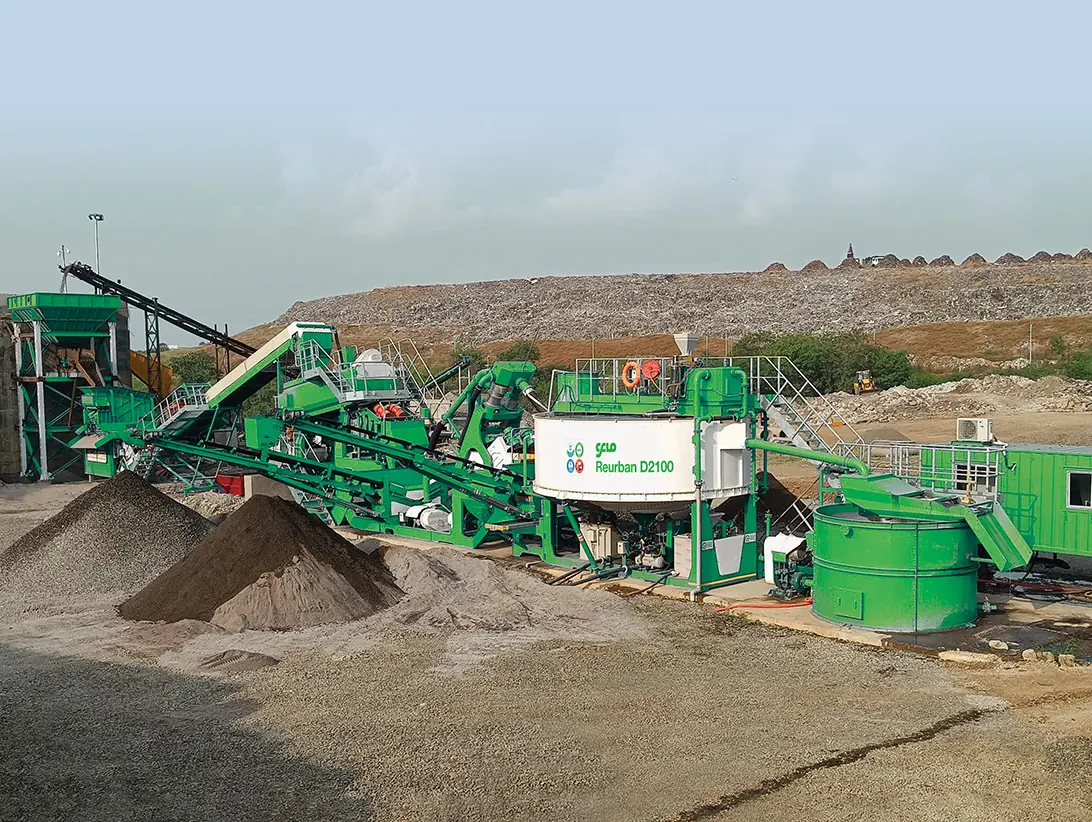
- Feed point efficiency: the feed hopper features an integrated belt feeder for efficient transfer of material to the next stage of processing
- Versatile scrubbing: the Scrubmax Heavy-duty Scrubbing System maximises product yield from feedstock with surface contamination, using high cast chrome paddles in a fan arrangement for consistent loads
- Trash removal: lightweights such as wood and plastics are collected from the lower end of the Scrubmax with most of the water, then dewatered. Removing this trash is essential, because with these impurities the product has limited applicability and low value. Four contaminants decide whether recycled aggregate sells at all: lightweights, organics, clay and cement bonded to the grain, and excess fines. The first two cost you the buyer's confidence, the second two cost you construction grade
- Cut point efficiency: each Reurban is custom built for your project, controlling silt cut points so recycled sand meets your specification every time
- Superior sand dewatering: the Centriscreen Dewatering & Sizing System delivers washed sand ready for market straight from the belts
Use up to 95% less water
The Reurban range integrates CFlo's tried and tested water recycling technology, reducing your water requirement by up to 95%. Sludge management technology accelerates tailings drying for a smaller tailings footprint, and the Easysettle Sludge Bay Manager uses high performance polymer technology to rigidify tailings at the point of disposal, releasing water instantaneously from the treated slurry back to the plant.
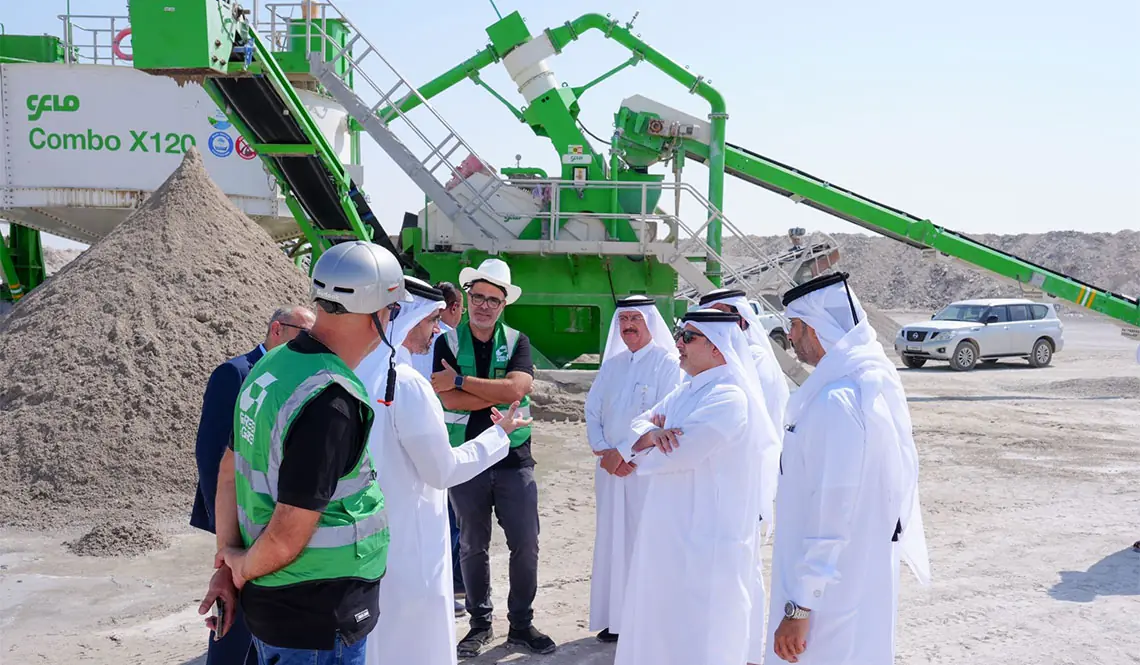
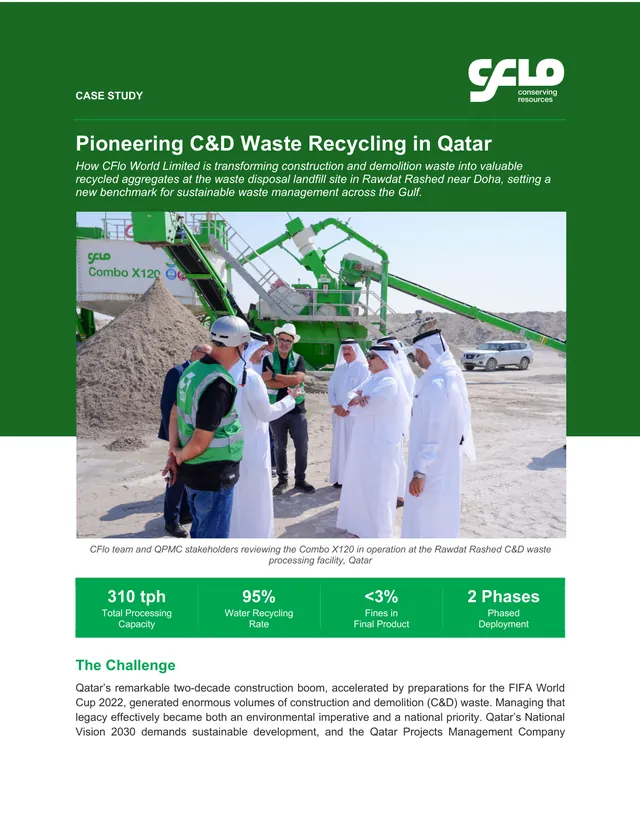
310 tonnes per hour in Qatar.
QPMC runs the Gulf's pioneering C&D recycling programme on CFlo technology.
Proven in the field
Reurban plants process more than 10,000 tonnes of construction and demolition waste a day, across seven Indian cities and in Qatar, Canada and Korea.
"With a processing capacity of 600 tonnes per day, this state-of-the-art plant is reshaping the way Mumbai handles construction and demolition waste. What was once a growing burden on our landfills, is now being transformed into high-quality recycled sand and aggregates."
Waste management operators, materials companies and public-sector miners run the Reurban. They include Indo Enviro Integrated Solutions Ltd, Ramky Environment, Metrro Waste Handling Pvt Ltd, Surat Green Precast Pvt Ltd, Hindustan Unilever Limited, Rise Eleven, NLC India Limited and Northern Coalfields Limited.
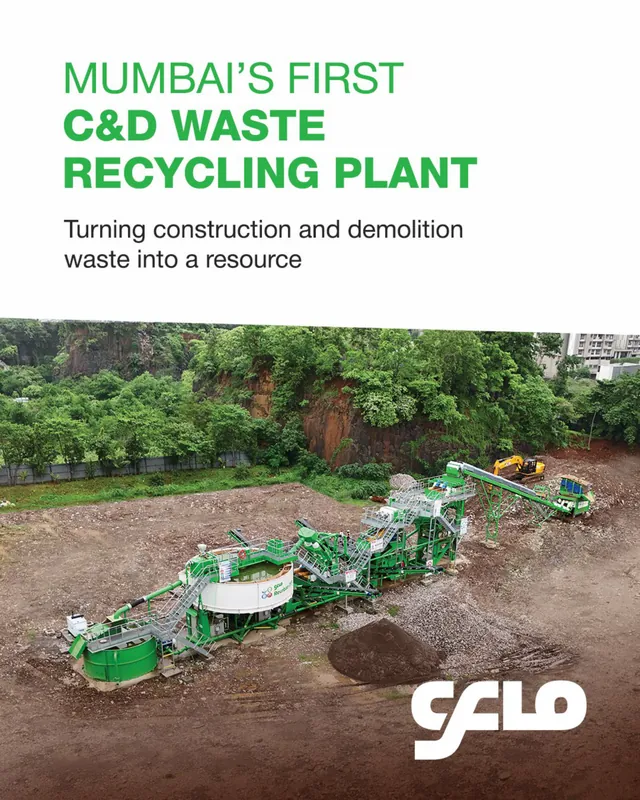
Mumbai's first C&D recycling plant, run by BMC and Antony Waste on CFlo technology, turns 600 tonnes of city debris a day into recycled aggregates and sand with a Reurban D5100 and up to 95% water recycling. In Qatar, QPMC and Green & Grey recycle C&D waste into QPMC-approved aggregates at 310 TPH at an off-grid landfill site at Rawdat Rashed, again with 95% water recycling.
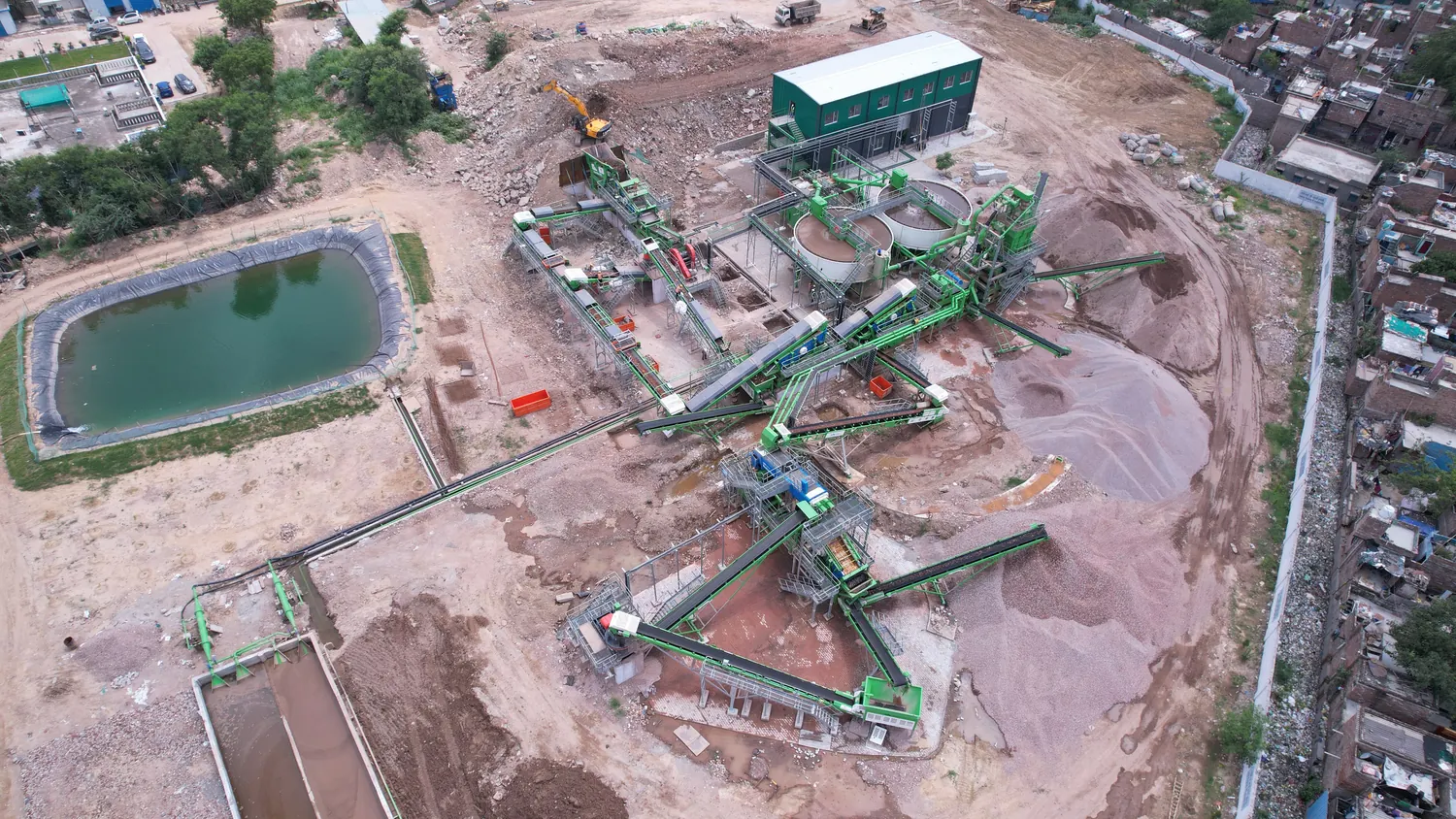
The largest C&D plant in the country
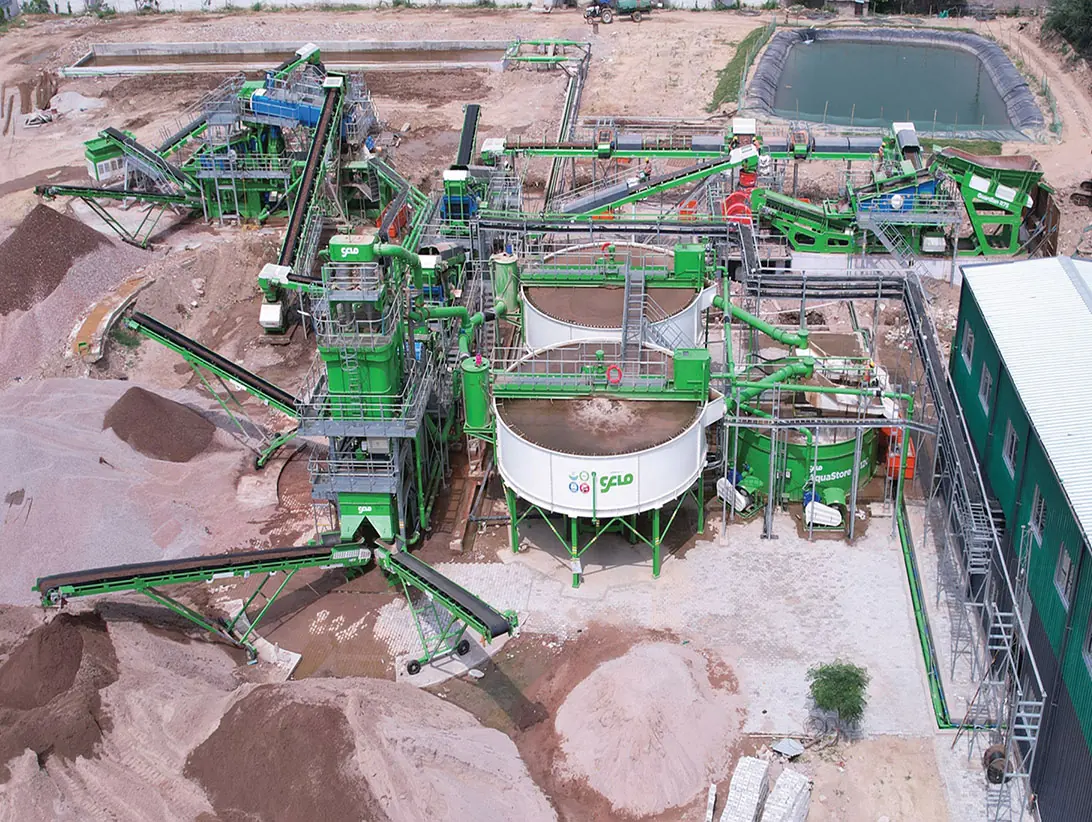
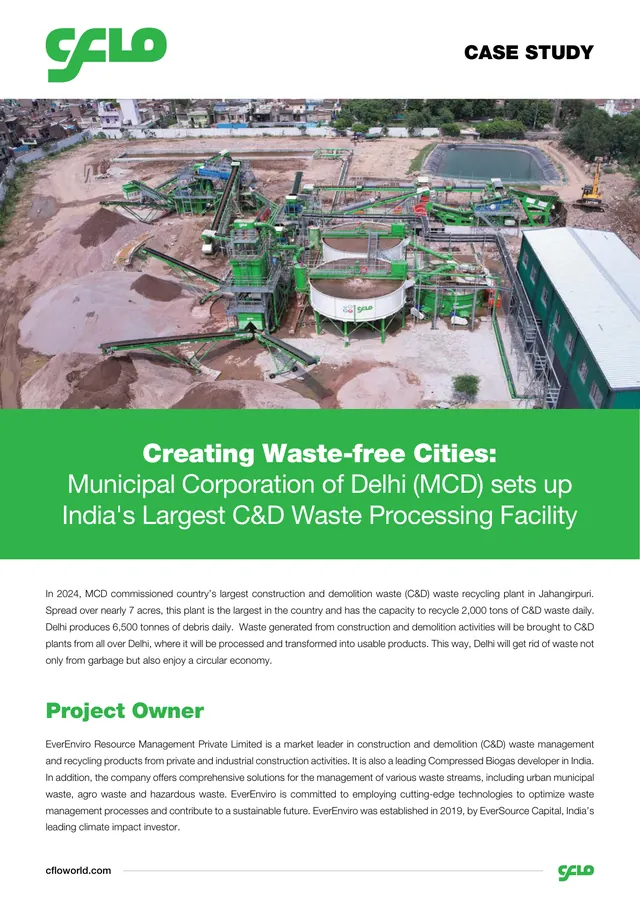
Delhi generates about 6,500 tonnes of construction and demolition debris a day. In 2024 the Municipal Corporation of Delhi commissioned the country's largest plant to deal with it, at Burari, operated by EverEnviro and built on Reurban technology across nearly seven acres. It recycles 2,000 tonnes a day into specification-grade sand and aggregates, which is close to a third of everything the city produces, processed inside the city rather than trucked out of it.
See it in action
In pictures
Frequently asked questions
What waste can a Reurban recycling plant process?
Construction and demolition waste is the core duty, but the same wet processing circuit repurposes incinerated bottom ash, tunnelling waste, excavation waste, waste glass, contaminated soil, waste foundry sand and clay-bound mining overburden or quarry by-product, where the clay is bonded to the stone and has to be scrubbed off before anything can be graded. Each Reurban is custom built for its feedstock, so the scrubbing intensity and cut points match the material you actually receive.
Is sand recycled from C&D waste actually usable in construction?
Yes, when it is wet processed. The Reurban washes, classifies and dewaters debris into sand and aggregates that hold their grading, because the silt cut point is engineered for your product and the feed is scrubbed rather than only crushed. At QPMC in Qatar, the recycled aggregates are QPMC-approved and re-enter the construction supply chain.
Why does trash removal matter in C&D recycling?
Because contaminated product is nearly worthless. Wood, plastics and other lightweights are collected from the lower end of the Scrubmax scrubbing system and dewatered separately. Without this step the recycled sand and aggregate have limited applicability and low value; with it, you produce clean material that holds a grading and commands a real market price.
How much water does a C&D waste recycling plant use?
The Reurban integrates CFlo water recycling technology that cuts fresh water demand by up to 95%. Easysettle rigidifies tailings at the point of disposal and releases water instantaneously back to the plant. Even the off-grid QPMC site in Qatar runs at 95% water recycling, so water scarcity rarely constrains deployment.
What throughput can the Reurban handle?
Capacity is engineered per project. Mumbai's first C&D plant processes 600 tonnes of debris a day on a Reurban D5100, while the QPMC installation in Qatar runs at 310 TPH. Because the system is modular and mobile, it scales from single-city contracts to national programmes.
How is wet recycling different from dry crushing and screening?
Dry crushing leaves silt, gypsum residue and lightweight contamination in the product, which caps its value and applications. The Reurban's wet circuit scrubs each particle, removes trash, controls the silt cut point and dewaters to market-ready moisture, producing specification-grade sand and aggregates rather than low-grade fill.
Which Reurban models are available, and what capacity does each run?
Four models. Each is custom built around your waste stream, and higher capacities are reached by combining units.
Standard capacity may vary with feed gradation and site conditions.
| Model | Throughput |
|---|---|
| Reurban D1100 | 12 to 15 tph |
| Reurban D2100 | 25 to 40 tph |
| Reurban D5100 | 65 to 75 tph |
| Reurban Hunter | Biomining of legacy waste, sized to the site |