
Construction & Demolition Waste Recycling Plants
Convert construction and demolition debris into recycled sand and aggregates that replace natural materials in concrete and asphalt.
PlatformsReurban
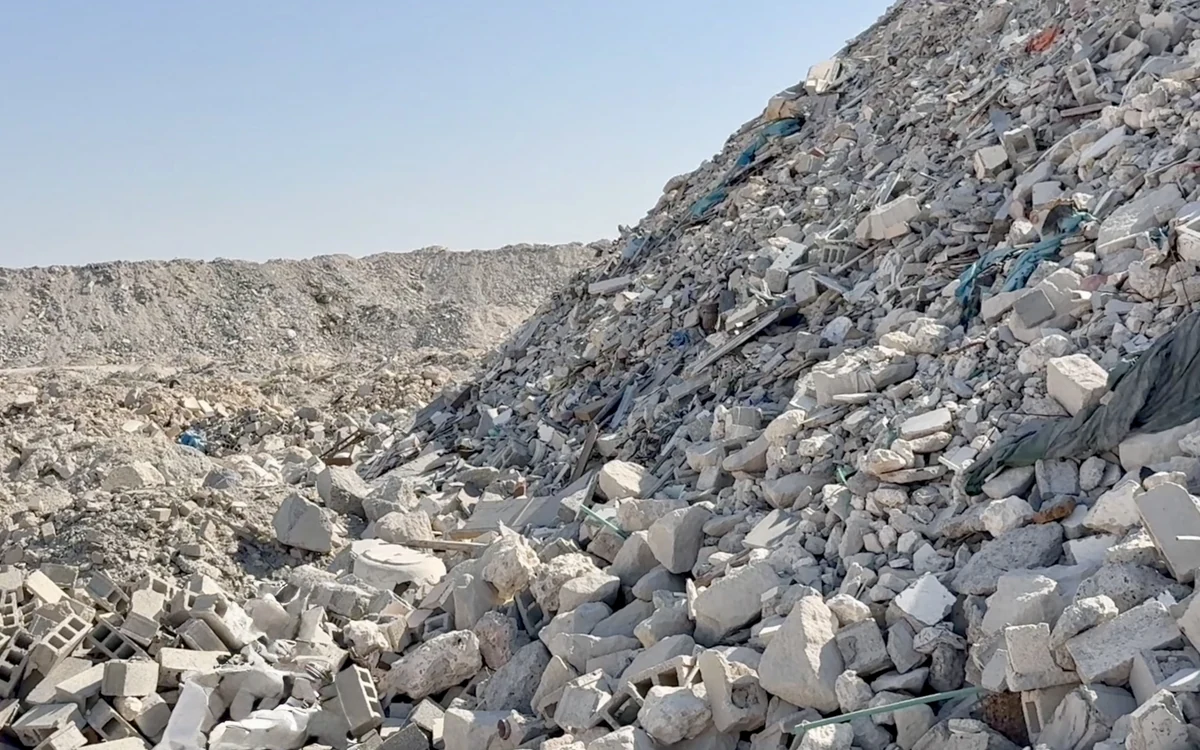
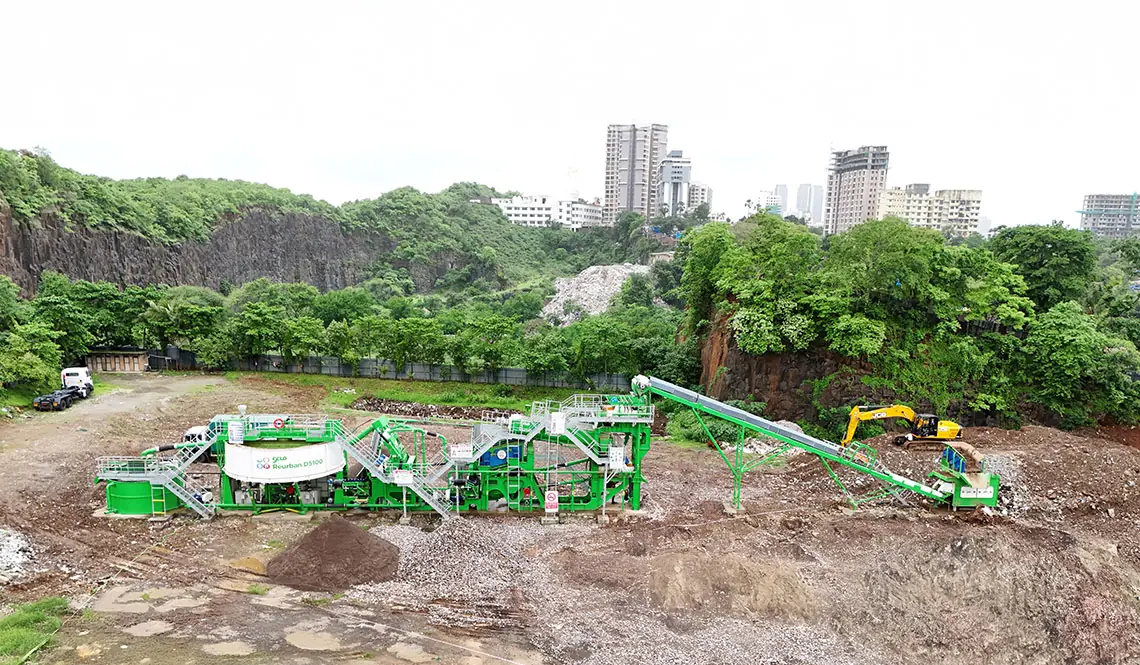
A C&D waste recycling plant washes construction and demolition debris, concrete, bricks, excavation waste, into recycled sand and aggregates fit for concrete and asphalt production. Washing removes the contaminants that dry processing leaves behind, maximising both material recovery and the range of end uses for the recycled products.
What is C&D waste?
Construction and Demolition (C&D) waste is the debris generated when buildings and civil engineering structures are built, renovated or demolished. It is a mixed stream: concrete, metals, bricks, glass, plastics and organics, varying with how and where it was generated.
Unmanaged, it is an urban menace. C&D waste is a major source of air pollution, landfill sites bury land worth billions of dollars, and illegal dumping destroys lakes and rivers. India's EPR mandate for C&D waste now makes generators responsible for recycling it, ending the dumping era and creating demand for proper processing capacity.
What counts as C&D waste, and what does not
The category is narrower than "site waste" and wider than rubble.
-
It is the mineral debris of building work: concrete, brick, block, stone, tile, ceramics and mortar, along with the metals, timber, glass and plastics that come away with them.
-
It is not municipal solid waste, which is household and commercial refuse with a high organic fraction and a different problem entirely.
-
It is not excavation and tunnelling spoil either, which is undisturbed ground rather than material that has already been built with, though the two are often handled on the same plant.
Why C&D waste is difficult to recycle
Crushed rubble resembles aggregate but does not perform like it. Four contaminants are responsible, and crushing removes none of them. Each affects the product differently, and together they are the reason much C&D recycling produces low-grade fill and goes no further.
| What arrives with the rubble | What it does to the product |
|---|---|
| Lightweight contaminants: plastic sheet, insulation, packaging | Limited applicability, so low value |
| Organics: timber, roots, vegetation | Lowers buyers' confidence in recycled material |
| Clay and cement adherence, bonded to the grain surface | Lowers workability and raises the water-cement ratio |
| High fines content | Product cannot meet construction grade |
The first two affect whether recycled aggregate is accepted at all. The second two determine whether it can be specified for concrete.
Washing addresses all four. Scrubbing separates the clay bond and floats the lightweights off, so between 95% and 100% of the input leaves as a saleable product rather than as a smaller pile of the same problem. The fine fraction is part of that: it leaves as screened soil, sold for landscaping and backfill, rather than going to landfill. CFlo technology repurposes around 10,000 tonnes of C&D waste every day on that basis.
Why washing, not just crushing
The distinction the market makes is between recycled aggregate and washed recycled aggregate. Recycled aggregate is material recovered from construction and demolition waste, such as old concrete, brick and excavated soil, crushed and screened for reuse. It sells into fill and sub-base. Washed recycled aggregate has been through a wash plant as well, so the clay, silt, dust, wood and light contaminants are gone, and it competes with primary aggregate on specification rather than on price. The washing stage is what moves the output from one market to the other, and the wash plant is what performs it.
Only a washing plant lets you maximise recovery and remove the contaminants that otherwise restrict where your recycled products can be sold. A CFlo C&D washing system helps you:
- Maximise recycling of construction, demolition and excavation waste
- Produce high-quality recycled sand and aggregates that replace natural materials in concrete and asphalt production
- Meet growing demand for sand and aggregates from a sustainable source, protecting supply where natural reserves are in decline
- Cut transport costs and carbon footprint, since recycled materials are produced closer to urban centres than quarried ones
Eight processing stages, configured per project
C&D and excavation waste is highly variable, so every plant is built to the specific requirements of the project: contamination levels, fines content and input variability (excavation waste, railway ballast and more) all shape the design. Depending on your requirements the plant combines:
- Feeding and pre-screening
- Aggregate scrubbing
- Contaminant removal
- Metals removal
- Sand washing
- Aggregate sizing
- Primary stage water treatment
- Sludge management
The Reurban system
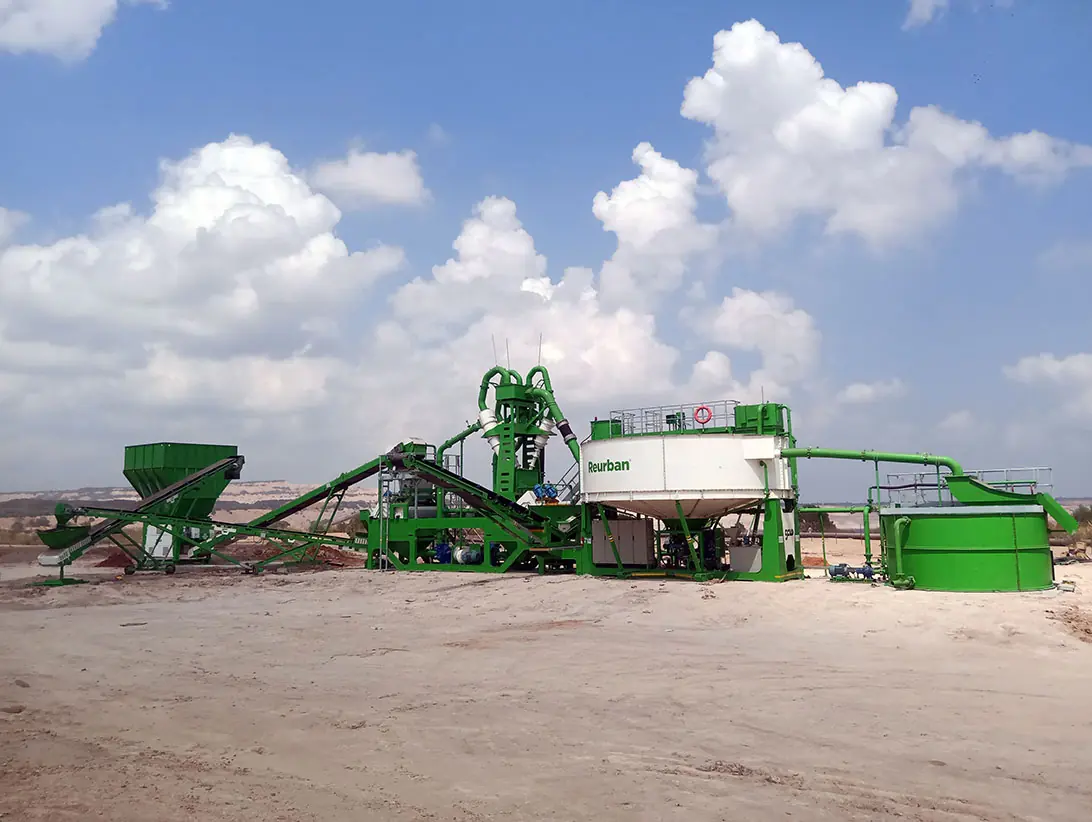
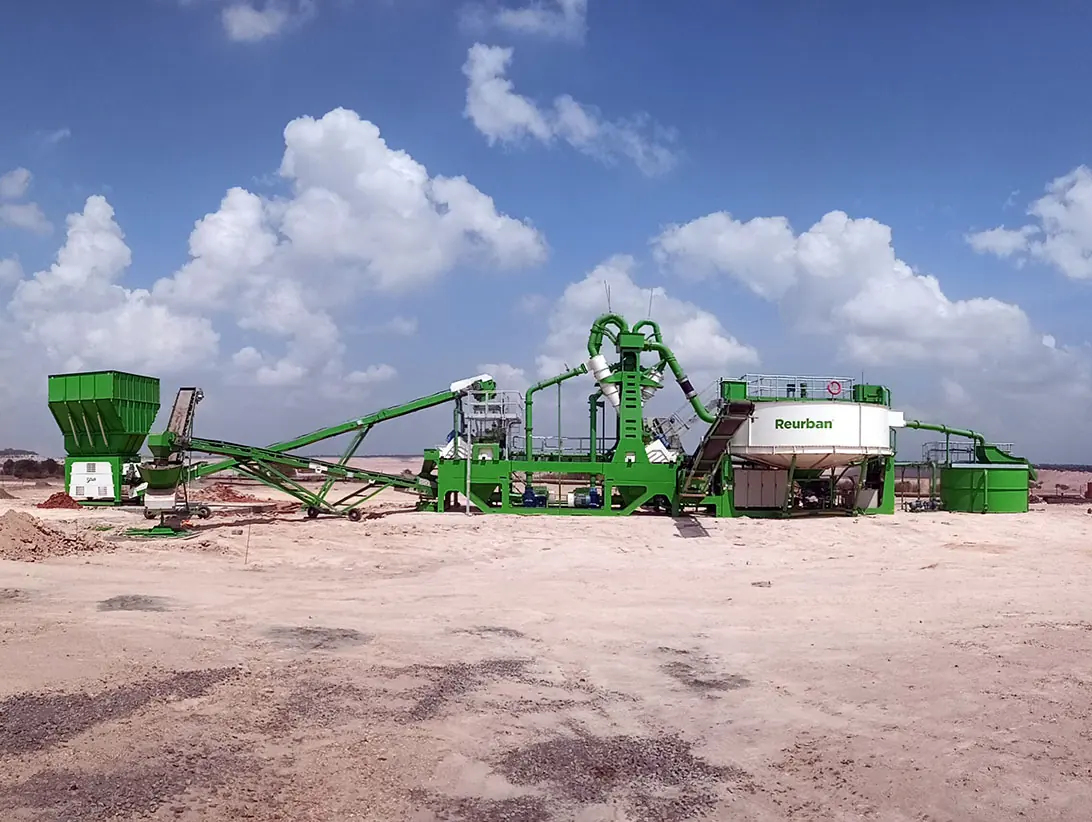
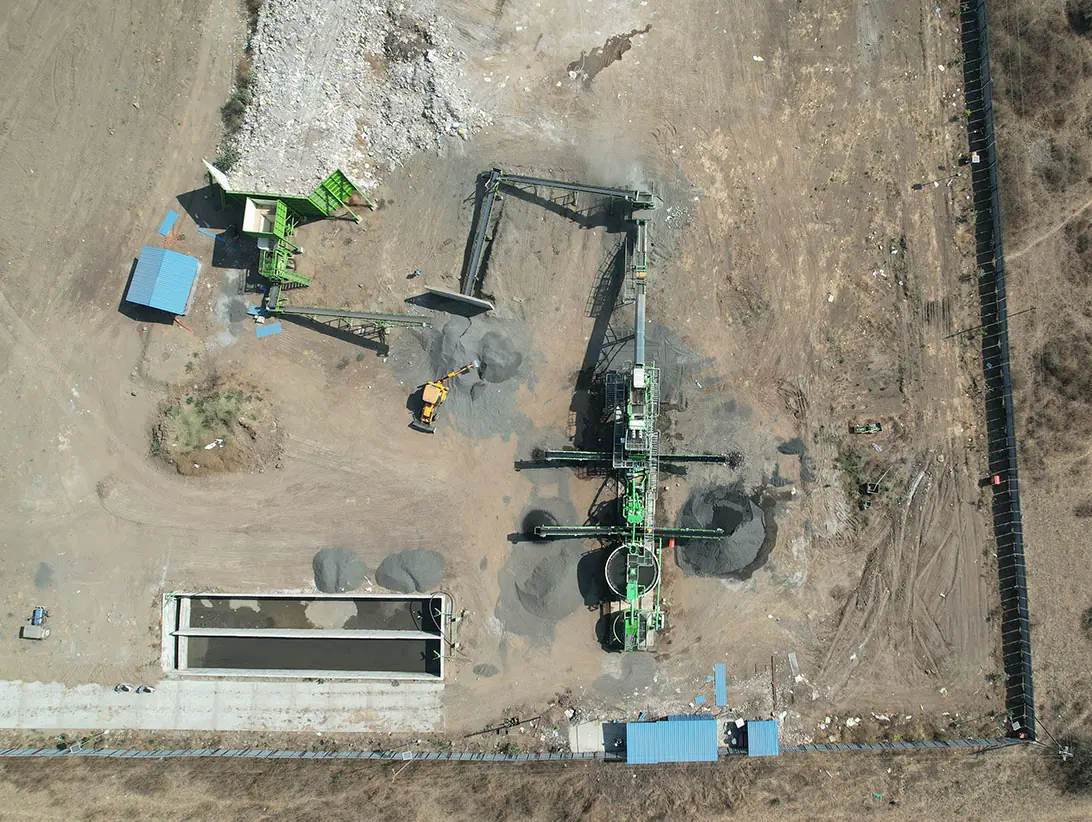
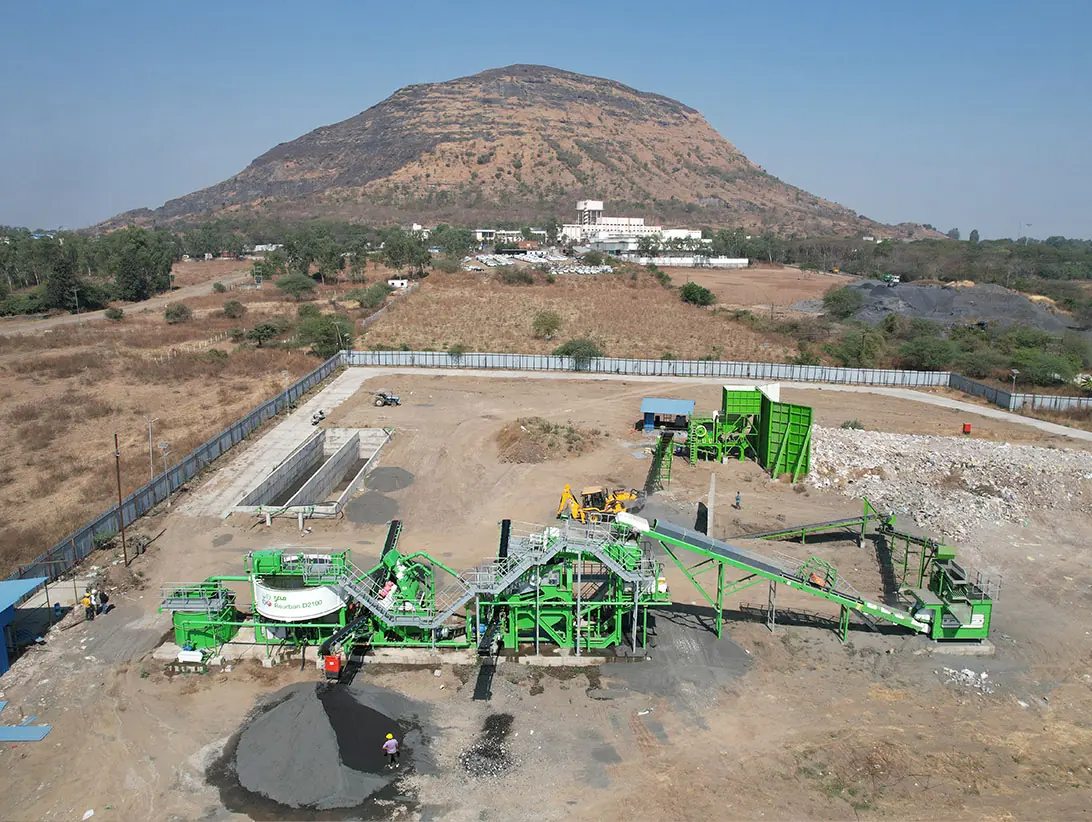
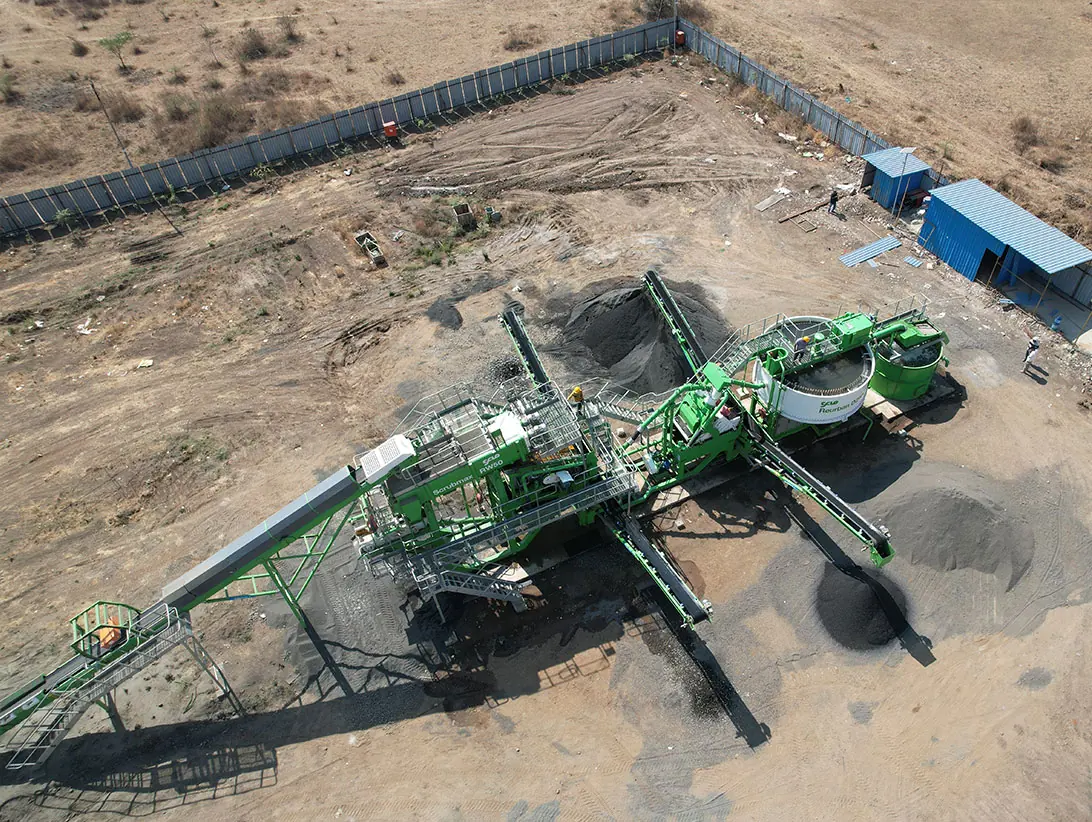
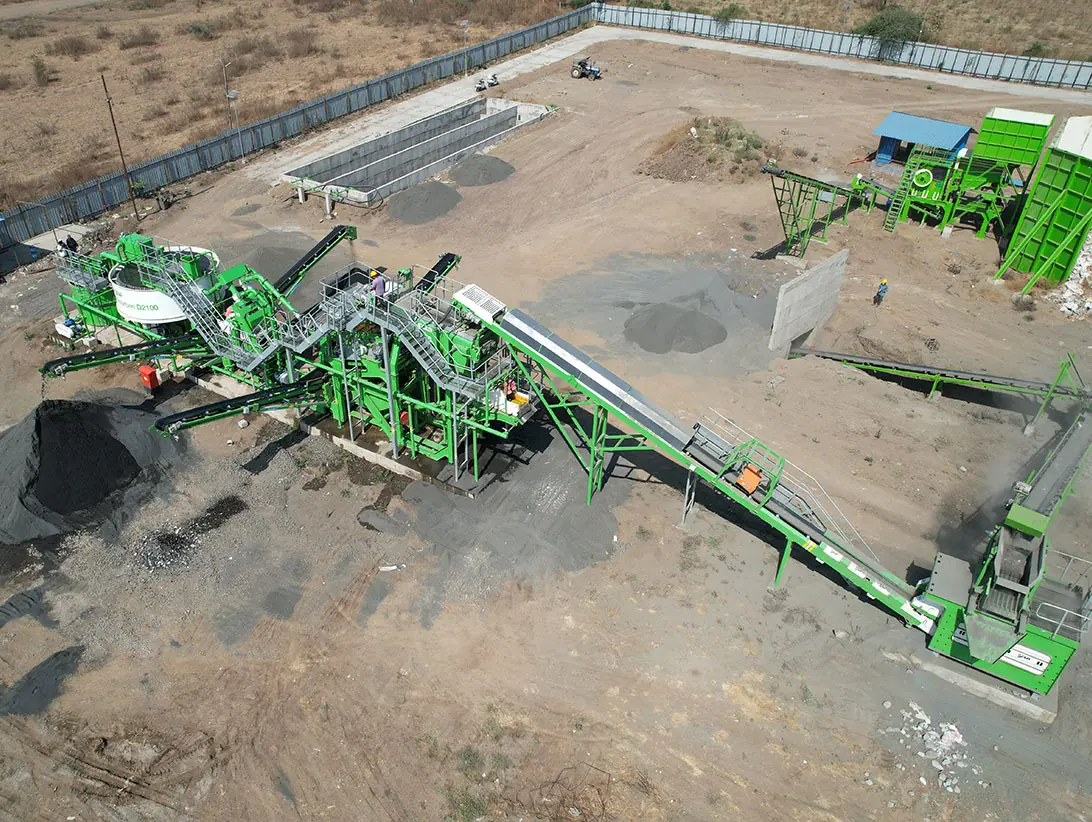
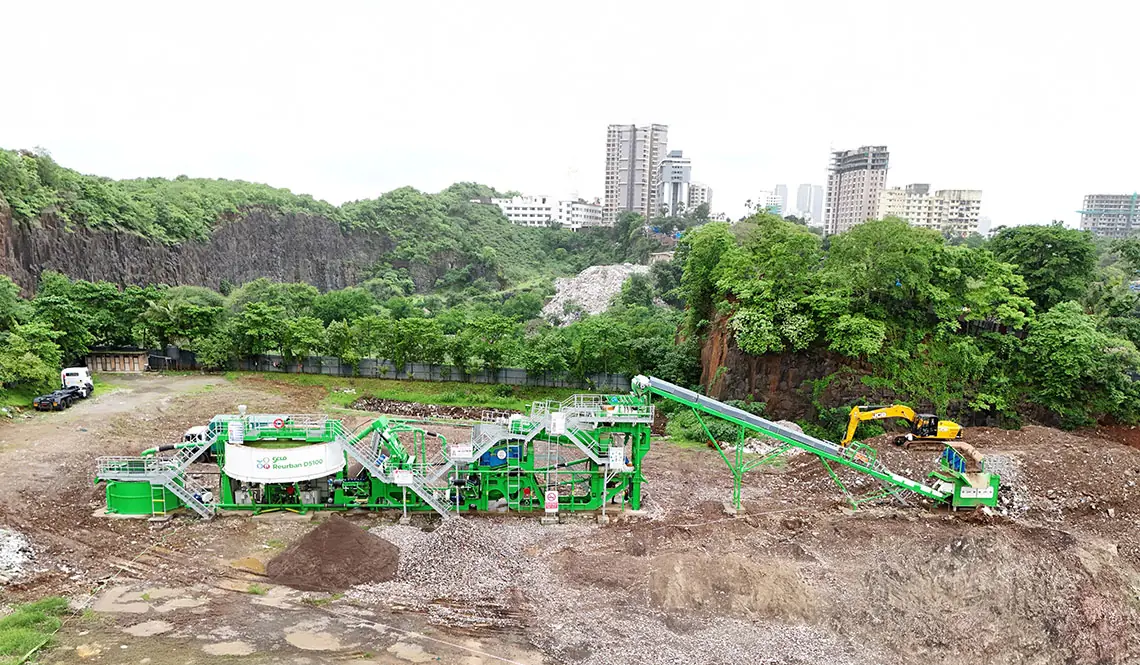
CFlo's Reurban is our dedicated C&D waste recycling plant range, engineered as a Next-Gen 'Super' System: Super modular for compact shipping and plug-and-play installation close to the urban sites that generate the waste, Super smart with process control that holds product quality while reducing water and power, and Super easy with app-guided installation and service.
What the recovered material becomes
Washed sand and aggregate are the plant's output. They are not the end of the chain.
-
Green aggregates. Graded aggregate made by processing construction and demolition waste, put back into concrete and civil works rather than quarried afresh. This is the circular part of the circular economy: the same material, in the same city, doing the same job again.
-
Unburnt bricks. Made from the recovered material and cured rather than fired. Skipping the kiln matters: with no firing, the energy and emissions of a brick kiln are removed from the product's footprint.
-
Perforated thermo sustainable bricks. Facing bricks intended for visible work such as exterior facades, which is a harder test than fill. A product that has to look right in a facade is being bought on appearance and consistency, not on being the cheap option.
A facing brick is a useful measure of the processing, because it is bought on appearance and consistency rather than on price. The market for recycled construction material grows as the material is specified on performance rather than accepted as a concession.
Proven worldwide
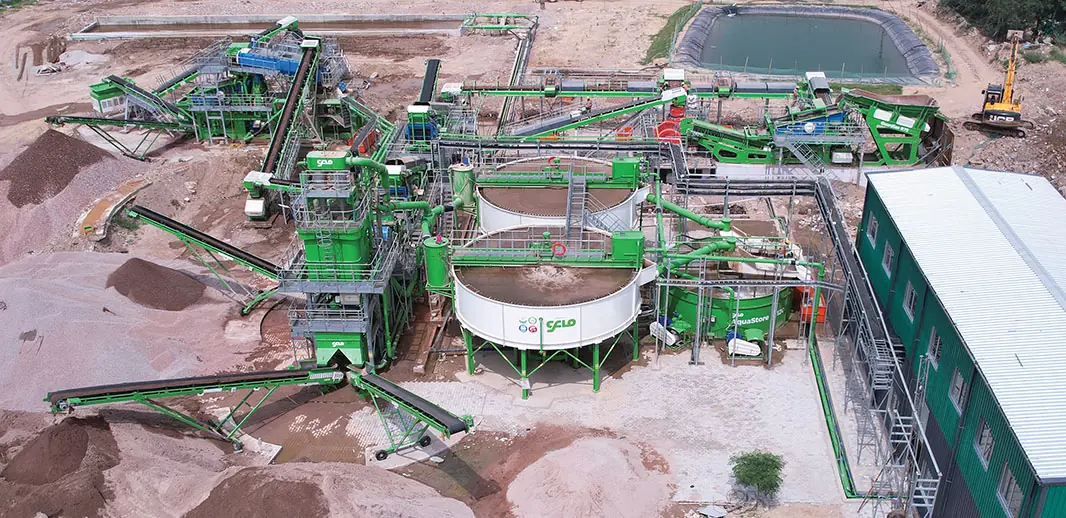
CFlo C&D plants process more than 10,000 tonnes of construction and demolition waste every day. In India that runs across seven cities, with three plants in Delhi, three in Mumbai and two in Hyderabad, and single installations at Nasik, Pune, Kolkata and Aurangabad. Outside India there are plants in Qatar, Canada and two in Korea, supported from regional hubs in Sharjah and the United Kingdom. Reurban and CFlo C&D plants operate across four continents: QPMC Rawdat Rashed (Qatar), AG Enviro Infra Project (Maharashtra), Metrro Waste Handling (Maharashtra), EverEnviro (Burari, Delhi), Pimpri (Maharashtra) and Surat Green Precast in India and the Gulf, with further installations serving recycling operations in Canada and South Korea. Each reference installation is documented in a published case study.
Two related pages
The material arriving from an excavation rather than a demolition is a different mix, and it is covered on soils and excavation waste. Where the finished product is being sold to a specification rather than reused on the job, see washed recycled aggregate.
Scalping the feed before it reaches the plant
Demolition arisings arrive as whatever the building was: concrete, brick, timber, reinforcing bar, soil and rubble in one load. A wash plant fed that directly spends its day clearing blockages.
The Strato Series scalping screener takes that raw feed first. An excavator loads it directly, a variable-speed feeder meters it onto a dual-deck screen, and oversize and tramp material are removed before anything reaches the Reurban. Finger screen media handles the sticky, high-moisture material that would blind woven mesh, and a self-cleaning magnet pulls reinforcing bar out of the stream. It is all-electric, with no diesel engine and no hydraulics, which is what allows it to work inside a city boundary where exhaust emissions decide whether a machine is permitted at all.
See it in action
In pictures
Real plants in this application
Frequently asked questions
What is C&D waste?
Construction and demolition waste is the debris generated when buildings and civil engineering structures are built, renovated or demolished. It is a mixed mineral stream: concrete, brick, block, stone, tile and mortar, together with the metals, timber, glass and plastics that come away with them.
Is C&D waste the same as municipal solid waste?
No. Municipal solid waste is household and commercial refuse with a high organic fraction. C&D waste is predominantly mineral, which is what makes it recoverable as sand and aggregate rather than only as landfill or fuel. Excavation and tunnelling spoil is a third category again: undisturbed ground rather than material that has already been built with.
How much C&D waste can actually be recycled?
On a washing circuit, between 95% and 100% of the input leaves as saleable product, counting the fine fraction that leaves as screened soil. Crushing and screening alone recovers far less of the value, because the mud, clay, gypsum, timber and plastic that arrive with the rubble do not crush away and stay in the product, holding it at low-grade fill.
Why is C&D waste difficult to recycle?
Because the contamination is physically mixed into it rather than sitting on top. Clay bonds to the aggregate surface and lightweights such as timber, plastic sheet and insulation are dispersed through the load. Both have to be separated deliberately, by scrubbing and by density, before anything can be graded and sold.
What can recycled C&D waste actually be used for?
Washed recycled sand and aggregates from C&D waste replace natural materials in a range of construction applications, including concrete and asphalt production, precast products and general fill. Washing is what widens the market: it removes the contaminants that would otherwise restrict recycled products to low-value uses. Beyond sand and aggregate, the recovered material is made into green aggregates, unburnt bricks that need no kiln, and perforated thermo sustainable bricks used as facing brick on exterior facades.
Why does a C&D recycling plant need a washing stage?
Dry crushing and screening cannot remove the fine contaminants, clay, gypsum, lightweight organics, bound to C&D debris. Only washing maximises material recovery and contaminant removal, which determines whether your recycled sand and aggregate can enter high-value applications such as concrete production rather than being limited to fill.
How is the plant configured for my waste stream?
No two C&D streams are alike, so CFlo designs each plant to the project: contamination levels, fines content and input variability all shape it. The design draws on eight processing stages, from feeding and pre-screening through scrubbing, contaminant and metals removal, sand washing, aggregate sizing, water treatment and sludge management.
Does the plant handle excavation waste and railway ballast too?
Yes. CFlo C&D plants are designed for the full range of construction, demolition and excavation waste, including variable inputs such as excavation soils and railway ballast. The individual approach to each project means the scrubbing, contaminant removal and sand washing stages are sized for your actual feed.
What does India's EPR mandate mean for C&D waste generators?
The EPR mandate makes producers responsible for recycling the C&D waste they generate, ending routine dumping. Generators and processors now need recycling capacity that produces specification-grade, saleable recycled materials. A washing plant maximises the recovery rate and product quality that compliance and economics both depend on.
Why locate a recycling plant near the city?
C&D waste arises in urban centres, and that is also where recycled sand and aggregates are consumed. Processing close to market minimises transport costs in both directions and reduces the carbon footprint of your operation, one reason CFlo's modular Reurban plants are designed for compact urban sites.
What are washed recycled aggregates?
Recycled aggregate is material recovered from construction and demolition waste such as old concrete, brick and excavated soil, then reprocessed for reuse. Washed recycled aggregate has additionally been run through a wash plant with water, stripping out clay, silt, dust and lightweight contaminants, so it is clean enough for concrete and other high quality uses rather than fill alone. The washing stage is what decides which of the two markets the output reaches.