
Sea Sand Washing
Treating abundant marine sand so it meets concrete and plaster specifications.
PlatformsComboMicrograder
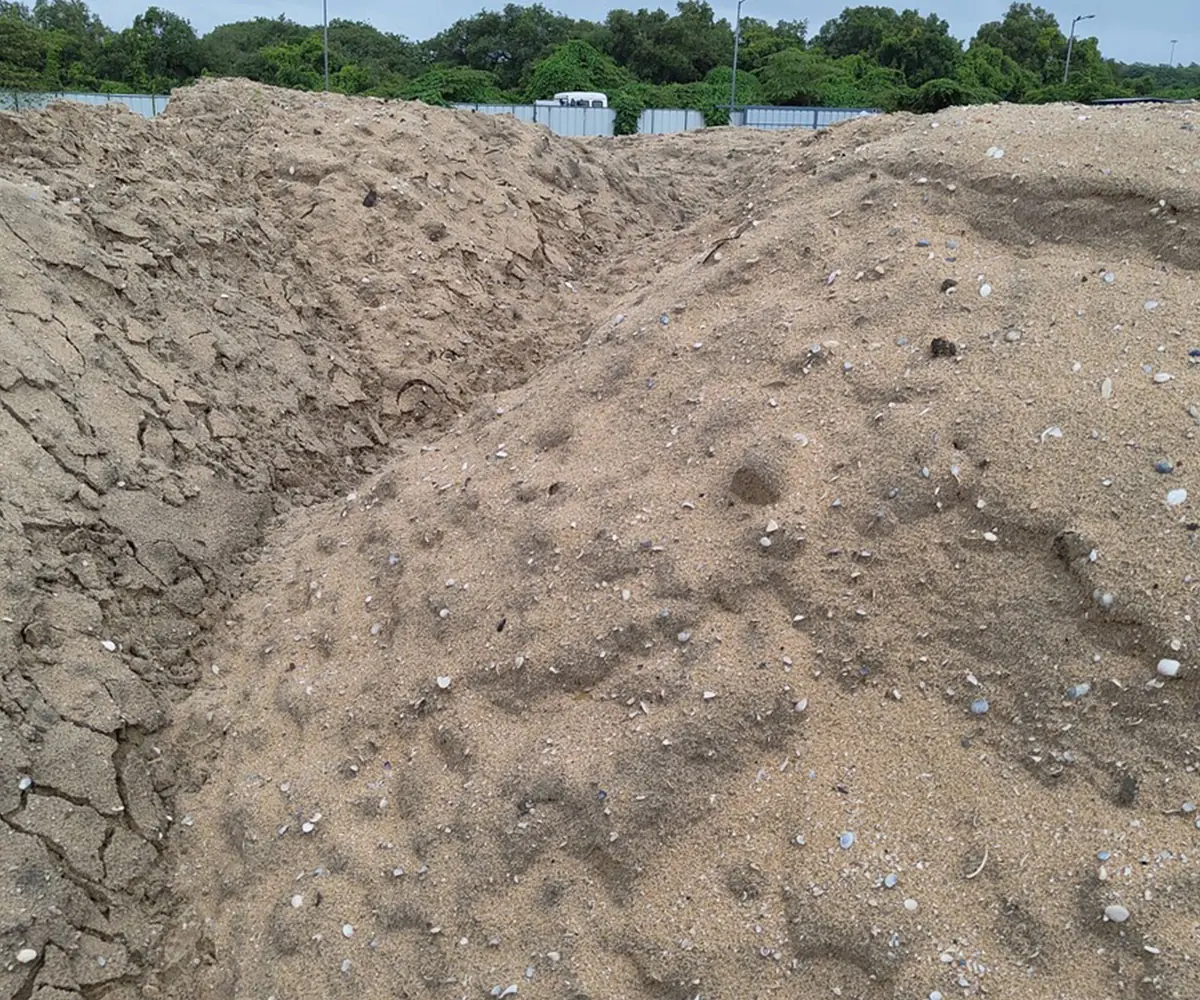
Sea sand (offshore or marine sand) is abundant, well graded and free of organic contaminants, but its shell and chloride content make the construction industry reluctant to use it. CFlo wet processing plants apply wet sizing, attrition scrubbing, classification and washing to reduce chlorides to desirable levels, producing concrete and plaster sand to BS EN 12620.
What sea sand is, and where the chloride comes from
Sea sand is a marine deposit: sand laid down and sorted by the sea rather than by a river, dredged offshore or won from coastal deposits. Geologically it sits closer to river sand than to crusher dust, which is why its grains are rounded and its grading naturally consistent.
In the UK and Ireland the same material trades as marine sand and gravel, or marine aggregate: dredged from the sea bed and landed at a wharf, where it is washed to remove salt and fines before it goes anywhere near a concrete plant. That wharf is the whole reason the processing question is different from a land-won pit. The plant sits on a tight, often urban site with a ship discharging into it, so footprint and throughput per square metre matter as much as the grading does.
The chloride is simply salt. Sea water fills the pore space between grains and dries onto their surfaces, so freshly dredged sand carries chloride in and on the material rather than locked inside it. This has two consequences. Because it sits on the surface, washing can rinse it away, which chemistry could not do if it were bound into the mineral. But the salt has to go somewhere, so the wash water gathers chloride as the plant runs, and it cannot be recycled indefinitely the way a freshwater circuit can.
Sea sand as a construction resource
Sea sand has found application in coastal areas of many countries. In Asia, where coastal areas are rich in sea sand, it is already widely used in local concrete construction. These sands, however, carry excess chlorides from deposition in saline water and need treatment before use. They are generally suitable for base and sub-base concrete, and tests have shown that even reinforced concrete can be made from them, yet the construction industry remains extremely reluctant to accept sea sand.
Its natural advantages are considerable:
- More rounded or cubical, like river sand
- Generally good and consistent grading, being a natural deposit
- No organic contaminants or silt
- Abundantly available
- Can be mined at low cost
The two barriers: shells and chloride
Shell content has no adverse effect on concrete strength as such, but it reduces workability. Investigations show shells above 5 mm affect workability to some extent, while those below 5 mm cause no significant reduction, so shell content alone does not make sea sand prohibitive for concrete.
Chloride is the more serious issue. Views and standards differ considerably on permissible chloride levels, but it is certain that chloride attacks and corrodes reinforcement, affecting the durability of concrete structures, and causes efflorescence as salts ooze out of the concrete. Chloride in concrete can come from cement, aggregates, water and even admixtures; it is the overall effect that matters, and chloride content must be controlled within limits.
How CFlo treats sea sand
CFlo wet processing systems use wet sizing, attrition scrubbing, classification and washing to reduce chloride content to desirable levels, the limits for which are set by BS EN 206 and BS 8500-2 rather than by the aggregate standard. The range of sea sand washing plants can treat sea sand to produce both concrete sand and plaster sand, depending on feed gradation, to BS EN 12620.
Water recovery in the system is lower than usual, as a good part of the water must be rejected due to chloride build-up. Chloride-rich silt obtained after washing can be bagged and used as an eco-friendly fertiliser, and wastewater can be processed through reverse osmosis before release. The related CFlo platform for sea sand duty is the Combo all-in-one washing system.
The equipment behind the grading
Dredged sea sand arrives graded fine and carrying shell, organics and salt. Screenmax FS86 High Precision Fines Screens hold the top of the gradation and dewater on the same deck, and the Vertimax upward flow classifier makes the mid-range cut by settling velocity while floating shell fragments and organic matter off the top on density. Both are built into the Micrograder plant and are also supplied on their own.
Heavy minerals in dredged sand
Dredged and offshore deposits frequently carry a heavy mineral fraction worth recovering before the sand is sold as aggregate. See heavy mineral sands and rare earths.
Frequently asked questions
What is sea sand?
Sea sand is a marine deposit, sorted by the sea rather than a river, taken from offshore dredging or coastal deposits. Its grains are rounded and its grading naturally consistent, which makes it closer to river sand than to crushed rock fines.
Where does the chloride in sea sand come from?
From sea water. Salt fills the pore space between the grains and dries onto their surfaces, so the chloride sits in and on the material rather than inside the mineral. That is why washing can remove it, and also why the wash water accumulates chloride and cannot be recycled indefinitely the way a freshwater circuit can.
Can sea sand be used to make concrete?
Yes, once treated. Untreated sea sand is generally suitable for base and sub-base concrete, and tests have shown even reinforced concrete can be made from it. CFlo washing plants reduce the chloride and shell content so the sand meets BS EN 12620 for concrete sand and plaster sand.
How is chloride removed from sea sand?
Through wet sizing, attrition scrubbing, classification and washing, which together bring chloride down to desirable levels. Because chloride builds up in the circuit, a good part of the process water is rejected rather than recycled, and that wastewater can be treated by reverse osmosis before release.
Do sea shells affect concrete quality?
Shell content has no adverse effect on concrete strength as such, but it reduces workability. Shells above 5 mm affect workability to some extent; those below 5 mm show no significant reduction. CFlo processing rejects sea shells during washing, removing the issue altogether.
Why does chloride content matter in concrete?
Chloride corrodes the steel reinforcement in concrete, undermining the durability of the structure, and causes efflorescence as salts ooze out of the surface. Since chloride can enter concrete from cement, aggregates, water and admixtures, the fine aggregate's contribution must be controlled within limits.
What happens to the silt and wash water from a sea sand plant?
The chloride-rich silt recovered after washing can be bagged and used as an eco-friendly fertiliser. Wastewater, which cannot all be recycled because of chloride build-up, can be processed through reverse osmosis before its release, keeping the operation environmentally responsible.
What products can a sea sand washing plant make?
Depending on feed gradation, CFlo sea sand washing plants produce both concrete sand and plaster sand to BS EN 12620. The advantages of the raw material, consistent natural grading, rounded particles and low cost, carry through to the finished construction sand.
What is marine aggregate?
Marine aggregate, or marine sand and gravel, is sand and gravel dredged from the sea bed and landed at a wharf. It is the UK and Ireland term for the material this page covers. Landed material is washed to strip out salt and fines before sale, which is a different processing problem from land-won sand and gravel because of the chloride and because the plant has to fit a wharf.