
Aggregate Washing
Modular washing plants that turn contaminated quarry rock into clean, consistently sized aggregate for stronger concrete.
PlatformsCombo
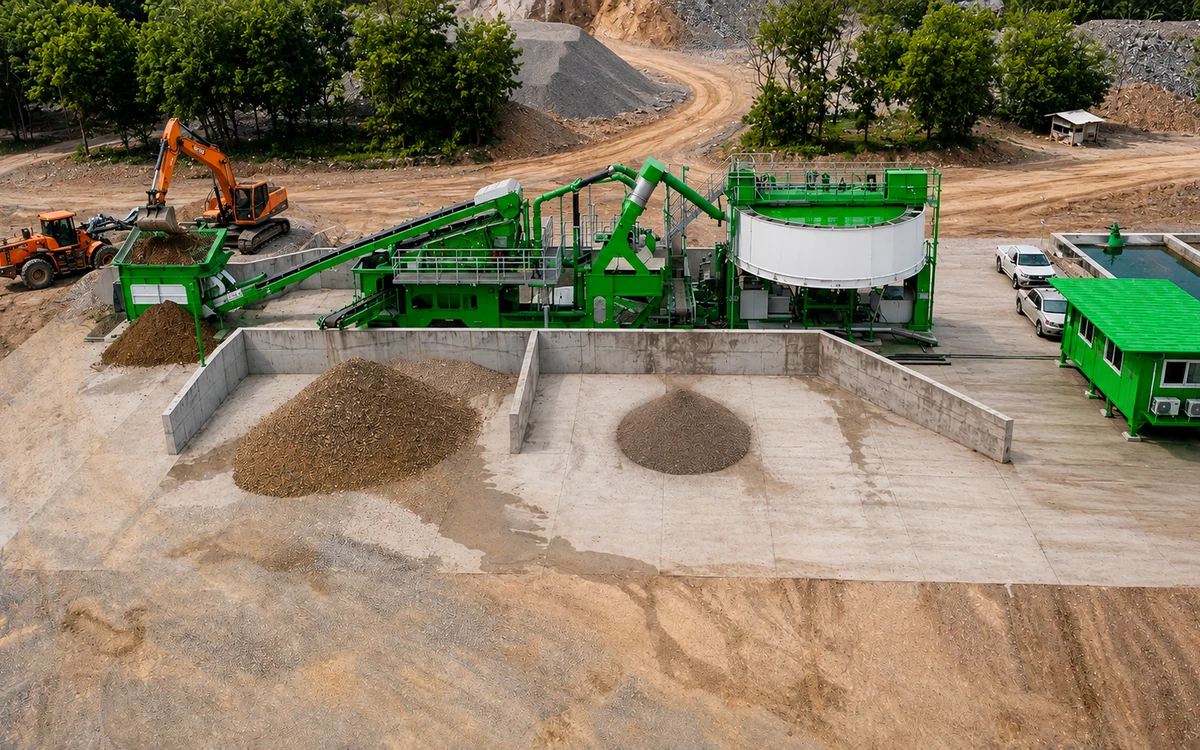
Aggregate washing removes the dirt, silt and clay that gravel, crushed stone and recycled concrete pick up during mining, crushing and dry screening. Clean aggregate bonds better with cement paste and lowers water demand in the mix. CFlo builds modular aggregate washing plants, including the Combo all-in-one system, that wash and classify aggregate by size and shape.
What aggregate is
Aggregate is the stone in concrete, and most of concrete is aggregate. Cement is the binder; the aggregate is the structure it binds. It comes in two fractions and the split is by size, at roughly 4.75 mm: above that is coarse aggregate, the gravel and crushed stone, and below it is fine aggregate, which is sand. A concrete mix specifies both, and it specifies how clean they have to be.
A washing plant exists to satisfy that second requirement. Cleanliness is not a preference here but a specification with a test behind it, and material that fails the test is either rejected or compensated for with additional cement.
Most coarse aggregate is crushed rock: hard rock such as limestone or granite, blasted from a quarry face and crushed to size. A large share of it is used dry, for roads and foundations, where nobody is testing it against a concrete fines limit. Washing is what moves crushed rock out of that market and into the one that pays for specification, and it is also what turns the quarry's crushed rock fines into manufactured sand rather than a stockpile of dust with no market. The machinery that does it is covered on the wash plants page.
Why coarse aggregate needs washing
Coarse aggregate is a crucial component in concrete production, typically comprising gravel, crushed stone or recycled concrete. These larger particles provide strength and stability to concrete mixes. During mining, crushing and dry screening, however, aggregates often retain dirt, silt and other contaminants on their surfaces.
These impurities reduce bonding with the cement paste and increase water demand, leading to a weaker final product or increased cement usage in the mix design. Washing removes them before they reach the batching plant.
How the washing process works
Once aggregate is extracted from the quarry, it is transported to a washing plant where high-pressure water jets remove impurities. The cleaned aggregate is then dewatered and classified by size and shape, giving you a consistent, in-spec product. CFlo's modular Combo system integrates washing, classification and dewatering in a single compact unit.
What washed aggregate delivers
- Improved cleanliness: dirt, clay and other contaminants that compromise concrete quality are removed
- Consistent aggregate quality: uniformity in size and cleanliness for reliable performance
- Enhanced bonding: better adhesion between aggregate and cement for stronger concrete
- Reduced water demand: lower water absorption, better workability and lower risk of shrinkage
Where washed aggregates are used
- Ready-mix concrete production: meets industry specifications and enhances durability
- Precast concrete manufacturing: clean, consistent aggregate improves structural integrity
- Pavement and road construction: strong, durable pavement structures
- Construction and infrastructure projects: high-quality aggregate that extends project life
Washed aggregates are clean, consistently sized and shaped rock particles, providing a strong foundation for construction projects worldwide.
The equipment behind clean aggregate
Some contamination rinses off with a spray bar. Plastic clay bonded onto the stone does not, and it is what fails a sand equivalent test and weakens the bond in concrete.
That duty belongs to the Scrubmax twin shaft logwasher, which holds material in a water bath and drives it against itself so the scrubbing is done stone-on-stone rather than by water pressure. Lightweights float off over the weir instead of reporting to the product. Ahead of it, the Strato Series scalping screener removes oversize and tramp material so the wash plant receives a controlled feed, and behind it the Hydromax water recycling system returns the process water and Easysettle handles the clay it carried away. All are built into the Combo and are also available as separate units.
Natural deposits
Material dug from a pit, river or alluvial deposit is a different problem, handled on the sand and gravel washing page.
Recycled and recovered feeds
The same washing principle applies to material recovered rather than quarried. Where the feed is excavation arisings or demolition waste, the product is washed recycled aggregate, graded to the same standards and sold into the same uses.
A 350 tph limestone reject upcycling plant

Frequently asked questions
What is aggregate?
Aggregate is the stone that makes up most of concrete, bound together by cement. It divides by size at roughly 4.75 mm: coarse aggregate above that, gravel and crushed stone, and fine aggregate below it, which is sand. A concrete mix specifies the grading of both and how clean they must be.
What is the difference between coarse and fine aggregate?
Size. Coarse aggregate is the fraction above about 4.75 mm and provides the structural skeleton of the mix. Fine aggregate is the sand below it, which fills the spaces between the coarse particles. Both are washed, but they behave differently in a plant and are recovered on different equipment.
How clean does aggregate have to be?
Clean enough to pass the concrete specification it is sold against, which is tested rather than judged by eye. The practical issue is that plastic clay bonded to the stone does not rinse off with a spray bar, and it is what fails a sand equivalent test, weakens the bond with the cement paste and raises the water demand of the mix.
Why does aggregate need to be washed before concrete production?
Aggregate retains dirt, silt and clay on its surface from mining, crushing and dry screening. These coatings reduce bonding between the aggregate and cement paste and increase water demand, so the concrete ends up weaker or needs more cement in the mix design. Washing removes the contamination at source, protecting both strength and cost.
What contaminants does an aggregate washing plant remove?
High-pressure water jets strip dirt, silt, clay and other fine contaminants from the surface of gravel, crushed stone and recycled concrete. After washing, the aggregate is classified by size and shape, so the product leaving the plant is both clean and consistently graded for its target specification.
What happens if I use unwashed aggregate in concrete?
Surface impurities weaken the bond between aggregate and cement paste and raise the water demand of the mix. The result is either a weaker final product or a costlier mix design with increased cement content to compensate. Poor aggregate cleanliness also makes performance unpredictable from batch to batch.
Where can washed aggregates be used?
Washed aggregates serve ready-mix concrete production, precast concrete manufacturing, pavement and road construction, and general construction and infrastructure projects. Because the material is clean and uniformly sized, it meets industry specifications, improves structural integrity and enhances the durability of the finished works.
Which CFlo equipment handles aggregate washing?
The Combo is CFlo's processing plant for aggregate washing: a modular, all-in-one wet processing system that washes, classifies and dewaters material in a single compact unit. Plants are configured to your feed material and specification, so you get clean, in-spec aggregate with a minimal footprint.