
Tunnelling and Excavation Waste Recycling
Maximise bentonite recovery and water recycling in tunnelling and underground works.
PlatformsReurban
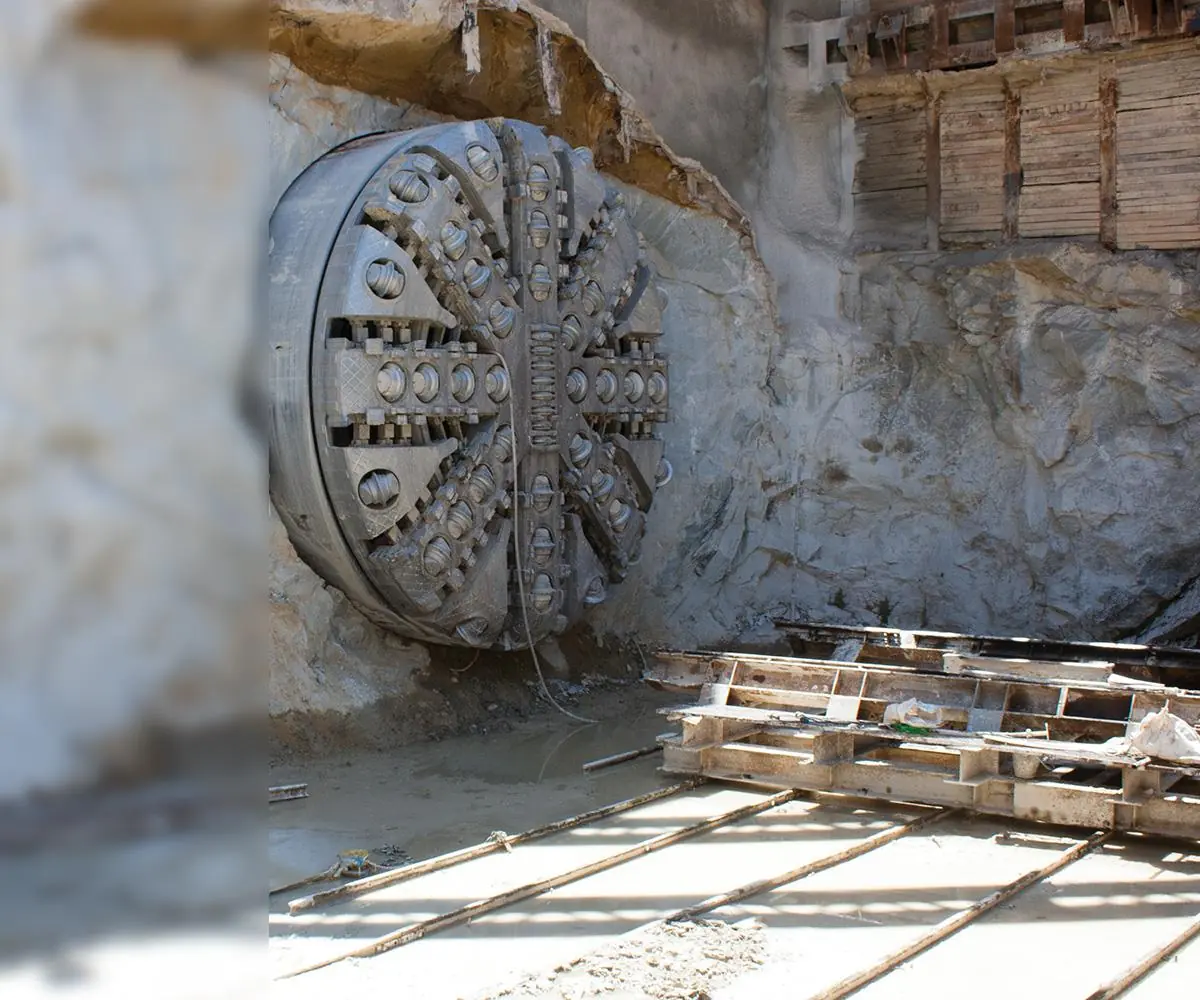
Tunnelling waste recycling treats the bentonite slurries and excavated mineral material generated by tunnel boring machine (TBM) operations. CFlo's closed loop slurry treatment plants (STPs) maximise bentonite recovery through customised hydrocyclones, de-sand and de-silt the slurry with high frequency dewatering, recover mineral material for on-site concrete production, and recycle process water back to the TBM.
Closed loop slurry treatment for underground works
CFlo's closed loop slurry treatment plants (STPs) for use in underground works will:
- Maximise bentonite recovery
- Maximise de-sanding and de-silting of bentonite slurries
- Maximise recovery of mineral material for reuse
- Maximise water recovery for use in tunnel boring machine (TBM) operations
Tunnel rock recycled as aggregate
Not every tunnel is driven by a slurry TBM. Where rock is excavated conventionally it is usually treated as spoil and hauled to landfill, even though it is competent rock that has already been broken, lifted and brought to the surface at considerable cost.
The reason it gets dumped is variability. Geology changes along the drive, and the excavated material arrives with inconsistent grading, shape and cleanliness, so it fails an aggregate specification as it stands. Washing and grading is what resolves that: scrub off the fines, separate it into sized fractions, and the same material becomes concrete aggregate or road subbase. It is produced at the point of demand, which on an urban tunnelling project is usually where aggregate is most expensive to bring in.
Road sweepings, gully waste and utility arisings
The same plant handles a family of urban waste streams that look unrelated on a waste transfer note and behave identically in a washing circuit.
Road sweepings are the grit, silt, leaf litter and rubbish a mechanical sweeper collects. The bulk of it by weight is sand and fine aggregate off the road surface, mixed with organics and hydrocarbons.
Gully waste is what comes out of road drains: silt, grit and water, with a light organic fraction on top.
Utility arisings are the spoil from opening a road to reach a cable, pipe or main. It is mostly the granular bedding and backfill that was put there in the first place, mixed with whatever the excavation disturbed.
Hydro excavation waste, also called vacuum excavation waste, is what a suction excavator recovers when digging around live services. It arrives as a slurry rather than a solid, which makes it awkward to landfill and expensive to dispose of by weight, because you are paying to dump water.
All four are wet, mixed, variable and currently a disposal cost. All four are also mostly recoverable mineral: sand and aggregate that a city has already paid for once, mixed with a small fraction of genuine rubbish.
Why washing changes the economics of these streams
Disposal charges by weight, and these materials are heavy because they are wet. Dewatering alone takes cost out. Recovery takes more: the sand and stone come back as saleable product, and only the organics, the litter and the true fines have to be dealt with.
For a local authority or a utility contractor the arithmetic is straightforward. You are currently paying landfill tax and haulage on material that is largely aggregate, and then buying virgin aggregate to backfill the same trench. A washing plant closes that loop, and does it near the point of arising rather than at the end of a long haul.
The stages are the ones the rest of this page describes: scalping and trash removal first, then scrubbing to break the bond between the fines and the granular material, classification, dewatering, and a closed water circuit so the contaminated water stays inside the plant.
Bentonite recovery
CFlo's extensive experience in the design of customised hydrocyclone plants delivers unrivalled cut point accuracy, so valuable bentonite is recovered from the slurry rather than lost to waste.
De-sanding and de-silting
High frequency dewatering technology ensures the efficient separation of crushed material from bentonite slurries, keeping the slurry within specification and the TBM cutting efficiently.
Mineral recovery for on-site reuse
Following dewatering, mineral tunnel waste can be screened and graded to allow for on-site production of mass concrete and sprayed concrete, cutting both disposal volumes and the need to import aggregate to the site.
Water recycling and sludge management
CFlo thickening and sludge management systems deal with the recovered bentonite slurries and allow process water to be recycled to your TBM operations, closing the loop on water consumption underground. The related CFlo platform for tunnelling duty is the Reurban wet processing system.
Frequently asked questions
Can road sweepings and gully waste really be recycled?
Yes, and the bulk of them are worth recovering. Most of the weight is sand and fine aggregate off the road surface, mixed with organics, litter and silt. A washing circuit separates the mineral from the rubbish and dewaters it, so what leaves as waste is a small fraction of what arrived.
What about hydro excavation and vacuum excavation waste?
It is the same problem in a wetter form. Suction excavation produces a slurry, and disposing of a slurry by weight means paying to landfill water. Dewatering it on site cuts the disposal tonnage immediately, and washing recovers the granular fraction as reusable backfill.
Are utility arisings worth processing?
Usually, because most of what comes out of a service trench is the bedding and backfill that was put in it. Recovering that on site means a contractor is not paying to remove aggregate at one end and buy replacement aggregate at the other.
How is bentonite recovered from TBM slurry?
Through customised hydrocyclone plants designed with CFlo's extensive experience in the field. The configurations deliver unrivalled cut point accuracy, separating the bentonite from excavated solids so it can be returned to the slurry circuit instead of being disposed of with the spoil.
Can excavated tunnel material be reused on site?
Yes. Following dewatering, mineral tunnel waste can be screened and graded to allow for on-site production of mass concrete and sprayed concrete. That reduces disposal volumes and the cost of importing fresh aggregate for the works.
How is water recycled back to the TBM?
CFlo thickening and sludge management systems process the recovered bentonite slurries, separating solids and releasing clarified water. That process water is recycled directly to the tunnel boring machine operations, which is what makes the slurry treatment plant a genuinely closed loop.
How are sand and silt separated from bentonite slurry?
High frequency dewatering technology efficiently separates crushed material from the bentonite slurry, de-sanding and de-silting it so the slurry retains the properties the TBM needs. The recovered solids then move on to screening and grading for reuse.
Where does this sit alongside your other waste pages?
Tunnelling and excavation arisings are granular material with contamination through it. Demolition rubble is covered on the C&D waste recycling page, old dumpsite material and trommel fines on the MSW and legacy waste page, and ground contaminated by an industrial process on the contaminated soil remediation page. The equipment overlaps heavily; the flowsheets differ.
Why choose a closed loop slurry treatment plant?
Because it maximises four things at once: bentonite recovery, de-sanding and de-silting of slurries, recovery of mineral material for reuse, and water recovery for TBM operations. Each recovered stream cuts disposal costs and reduces the fresh materials and water the project consumes.